
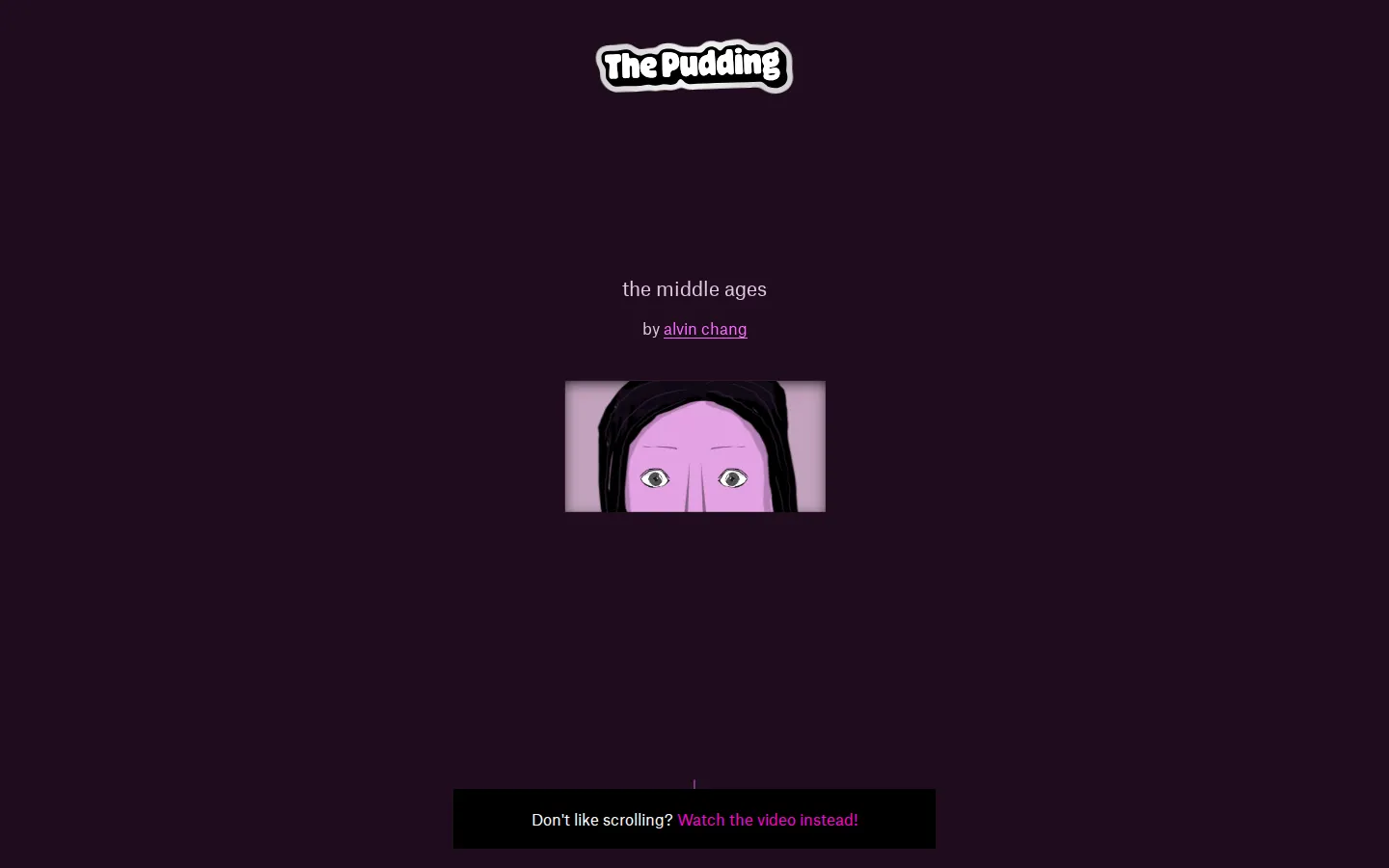
The Middle Ages turns a huge student-survey dataset into a conversation with children moving from elementary school into the awkward middle grades. It pairs synthetic student faces with school-belonging measures, institutional history, and adolescent-development research, while keeping the data source and sampling method visible.
What is The Middle Ages?
Instead of opening with a thesis and a bar chart, Alvin Chang asks a classroom how things are going. The answers unfold across grade levels: belonging, teacher relationships, support, school climate, and positive feelings change as the synthetic crowd moves into middle school. The essay then zooms out to explain adolescent development and the institutional history behind junior highs, middle schools, and K-8 alternatives. Its visual premise makes aggregate proportions feel human without presenting the generated faces as real survey respondents. That distinction matters, and the methodology states it plainly alongside the survey years and research sources.
What you can do there
- Follow student well-being measures across grade levels
- Compare middle-school and K-8 structures
- Read the survey methodology and research context
Why we picked it
A sprawling education question becomes legible through one sharp device: every percentage point is translated into a classroom of faces. The conversational voice is unusually willing to address young readers directly, yet the methodological section gives adults enough footing to question the sample and follow the cited research.
How to get the most from it
Follow the grades in order and watch which measure is being asked about before comparing the crowds. Pause at the history section to separate the effects of adolescence from the design of schools, then finish with the methodology so the synthetic students and the survey's scope stay in view.
Good to know
The faces are a synthetic representation of aggregate Panorama Education survey proportions, not identifiable children. The underlying calculations and every chart value were not independently reproduced. The piece discusses bullying, belonging, and well-being but is an editorial data story, not personal educational or mental-health guidance.
Who made it, and when?
Alvin Chang is the credited creator or organization. The earliest supported launch date we found is March 2025.
Creator’s official page Open The Middle AgesMore like this
Histography

A dense timeline where eras collapse into a field of small historical sparks.
Steve's Old Computer Museum

A wonderfully dusty filing cabinet of computers from before beige boxes learned to hide their weirdness.
Wayback Machine

A time machine for webpages, complete with a calendar and the occasional missing wire.
Bartosz Ciechanowski

Science essays with levers, sliders, and a knack for making machinery behave.