
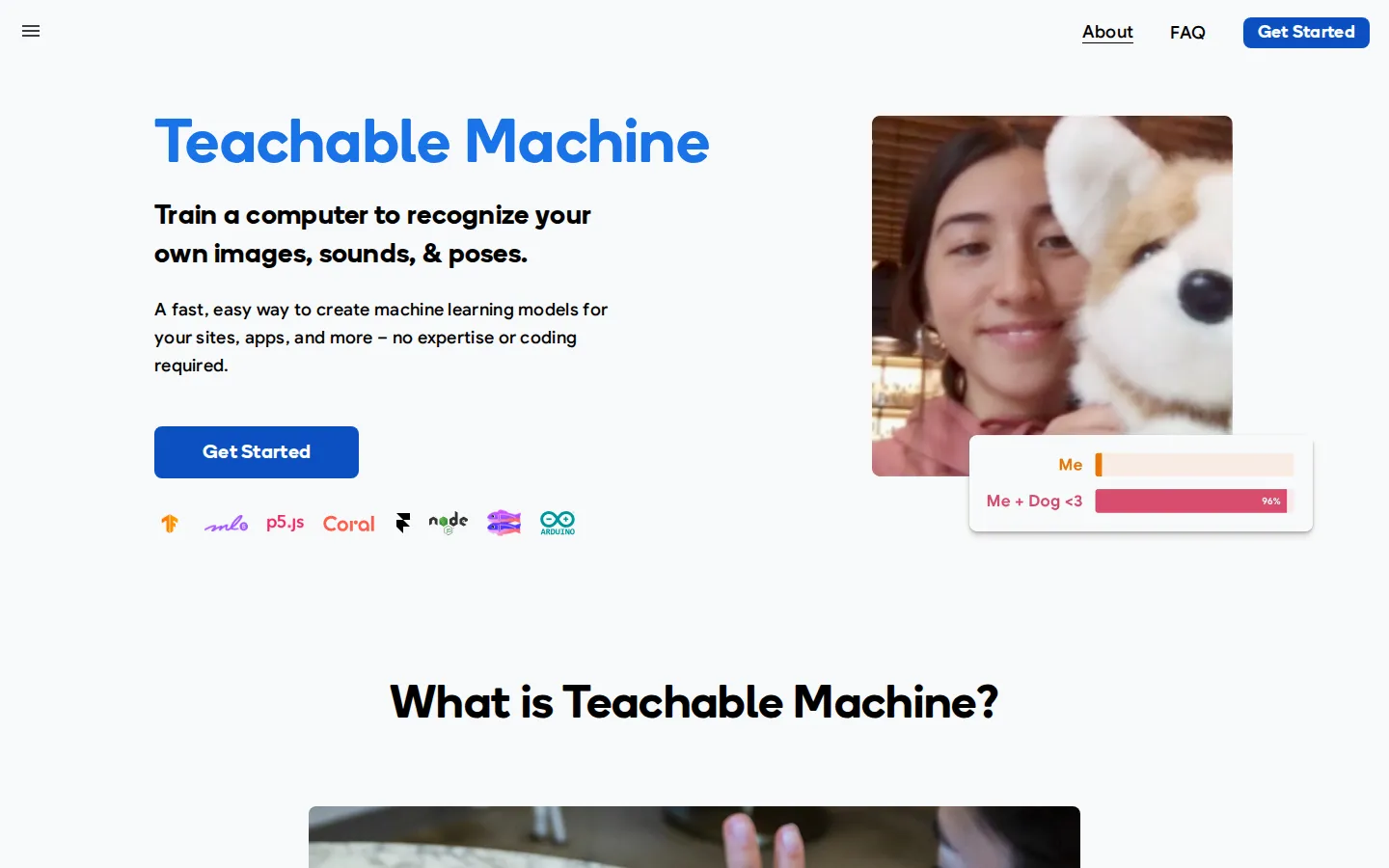
Teachable Machine turns a handful of labeled images, sounds, or poses into a working classification model in the browser. The path is unusually legible: collect examples, train, test the guesses, then export the result for another project.
What is Teachable Machine?
The useful trick here is not merely that the tool hides the code. It keeps the cause and effect close together. Make two or more classes, feed each one examples, and the preview reveals how the model sorts new input. Image projects can start with files or a webcam, while sound and pose projects add microphone or body-position routes. The landing page also supplies small tutorials and projects that carry an exported model into games, physical contraptions, and classroom exercises. That makes Teachable Machine a compact laboratory for seeing how a classifier learns both the pattern you intended and the shortcuts you accidentally supplied.
What you can do there
- Gather labeled image, sound, or pose examples
- Train and preview a classification model
- Export the model for another project
Why we picked it
Few introductions make training data feel this tangible. A lopsided set of examples or a distracting background can bend the result in plain sight, turning a playful demo into a useful conversation about accuracy and bias. You can get the lesson without first climbing a wall of syntax.
How to get the most from it
Start with two visually or audibly distinct classes and collect roughly balanced examples for each. Vary angle, distance, background, and lighting, then test with fresh material you did not train on. Once the model behaves, export it only if you have a real project in mind; the live preview already delivers the central lesson.
Good to know
The browser tool is free and can be opened without an account. Google says training examples stay on the device unless you choose to save a project to Drive, but camera, microphone, storage, and school privacy rules still deserve a deliberate check. Treat confidence bars as clues, not truth, and never use a quick classroom model for consequential judgments about people.
Who made it, and when?
Google Creative Lab is the credited creator or organization. The earliest supported launch date we found is 2017.
Creator’s official page Open Teachable MachineMore like this
Nicky Case

Playable explanations about trust, systems, anxiety, networks, and the way people affect one another.
The Illustrated TLS Connection

TLS, unpacked until the handshake has nowhere left to hide.
Learn Git Branching

Git’s family tree, finally allowed to move while you poke it.
How DNS Works

A DNS lesson that takes the scenic route through the internet