
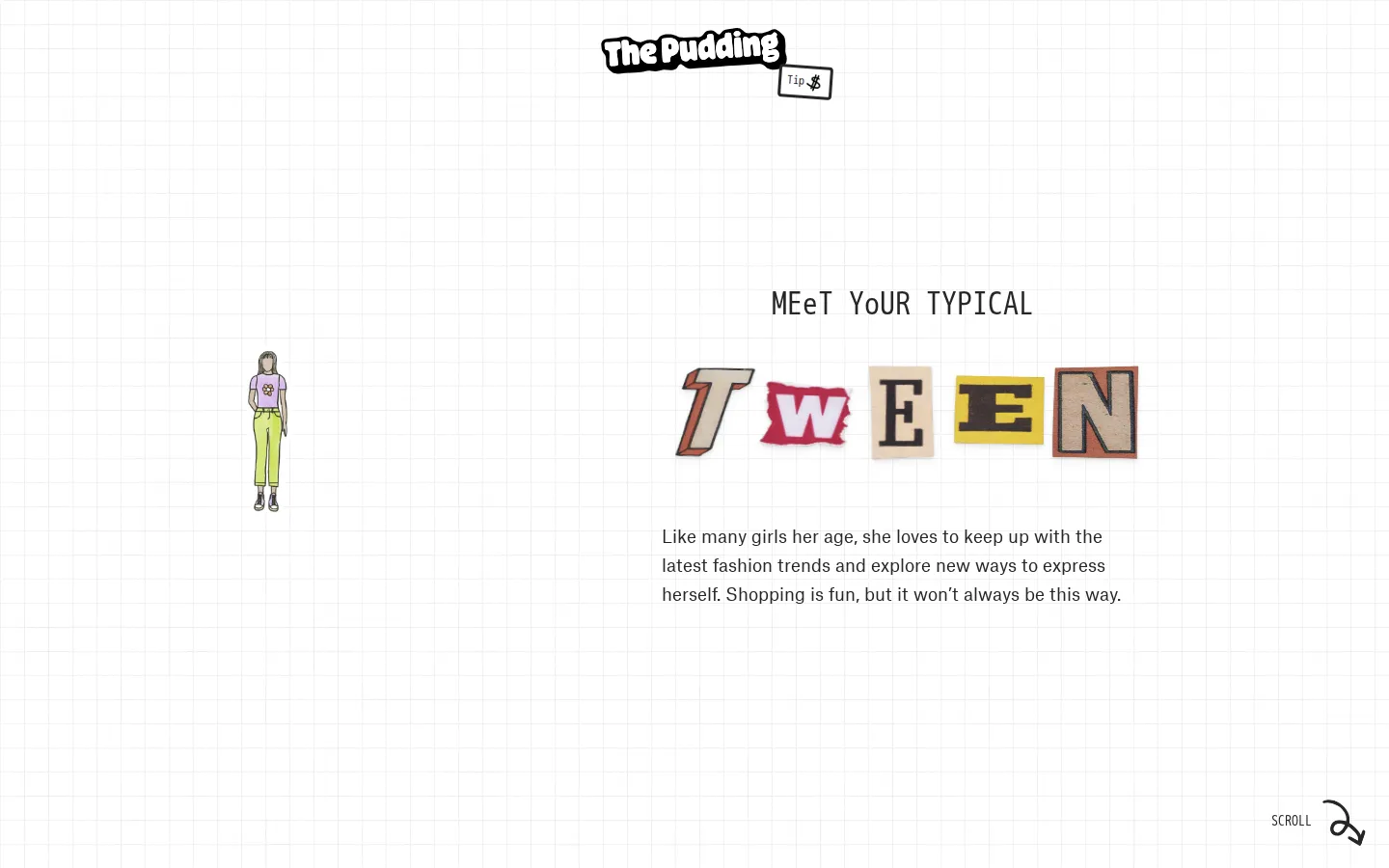
Amanda Sakuma and Jan Diehm trace a girl's path from junior clothes into an adult sizing system that quickly stops matching the median body. Federal measurements, ASTM tables, and 15 retailer charts turn familiar dressing-room frustration into a precise picture of inconsistent labels and rigid proportions.
What is Sizing Chaos?
The essay starts with an 11-year-old whose clothing label still roughly tracks age, then follows the gap that opens once adult sizing takes over. Interactive comparisons place federal waist measurements beside ASTM guidance and retailer charts, revealing how one body can collect a small alphabet soup of labels. A historical dress-form sequence gives vanity sizing more nuance than the usual punchline, while Sakuma's move into sewing shifts the story from labels to the single sample block from which many garments are scaled. The final section argues that fit problems are structural, not a personal failure to discover one's supposedly true size. A detailed methodology names the datasets, sample counts, retailer scope, and the age of the brand data.
What you can do there
- Follow a body-measurement story across age groups
- Compare ASTM guidance with retailer size charts
- Inspect how labeled sizes and garment proportions change
Why we picked it
Sizing frustration is common; seeing the machinery behind it is rarer. This piece keeps the statistics attached to recognizable moments—moving departments as a teenager, comparing two brands, or altering a pattern—so distributions feel human without becoming vague. It also labels its data limits instead of passing an aging retailer chart off as permanent truth.
How to get the most from it
Follow the story from the tween example onward before opening the exploratory comparisons. When a chart offers dots, dress forms, or a size selector, use it to compare one measurement across labels rather than hunting for a single correct size. Finish with the methodology before applying any brand example to a current purchase.
Good to know
Retailer charts in the analysis were collected in July 2025 and may have changed. Petite, tall, and curve ranges were outside the comparison, and complete interactive, mobile, audio, and accessibility behavior was not tested here. The article also discusses body measurements and exclusion in frank terms.
Who made it, and when?
Amanda Sakuma with Jan Diehm is the credited creator or organization.
Open Sizing ChaosMore like this
Nicky Case

Playable explanations about trust, systems, anxiety, networks, and the way people affect one another.
The Illustrated TLS Connection

TLS, unpacked until the handshake has nowhere left to hide.
Learn Git Branching

Git’s family tree, finally allowed to move while you poke it.
How DNS Works

A DNS lesson that takes the scenic route through the internet