
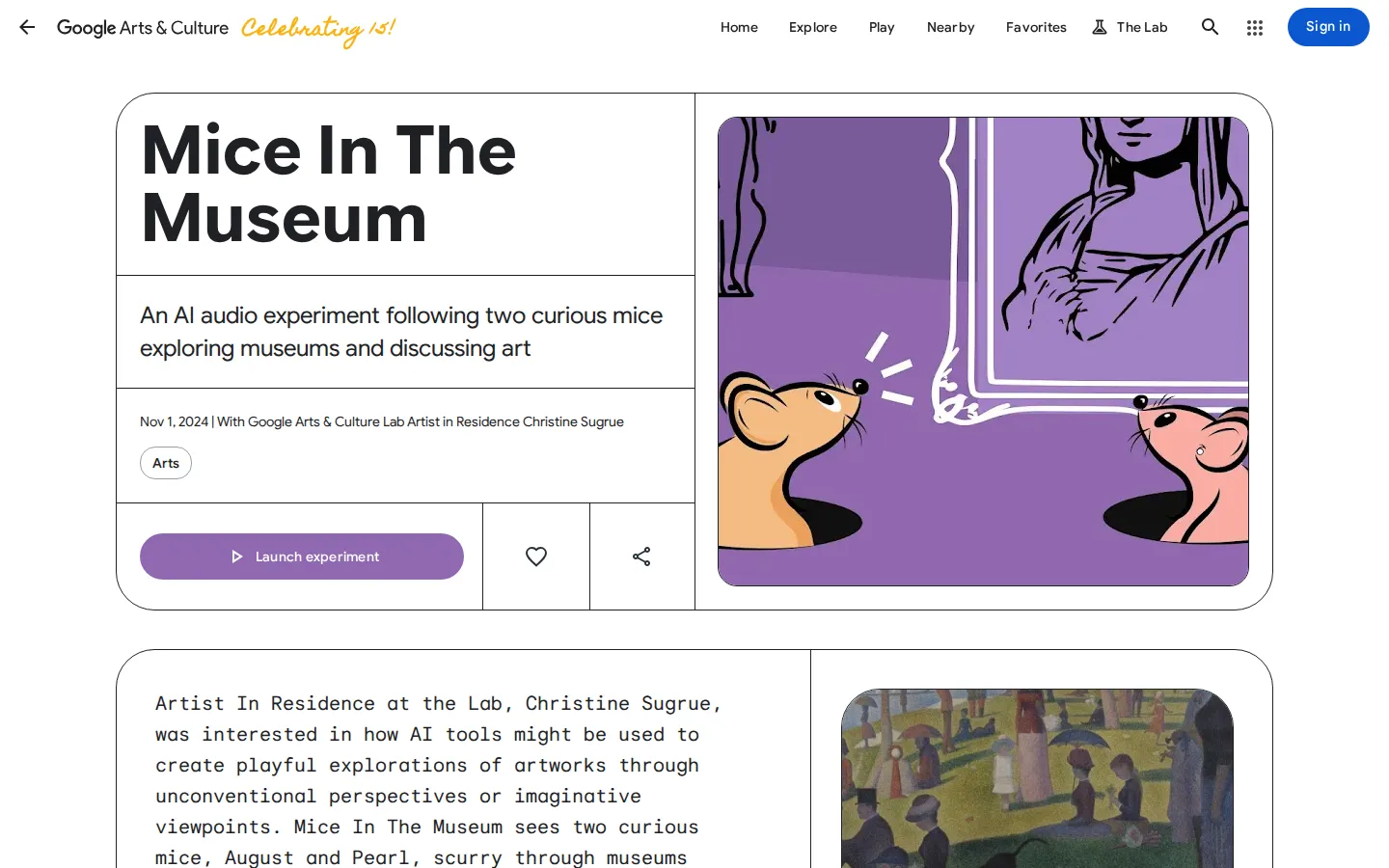
Mice In The Museum sends August and Pearl scurrying through artworks while a generated conversation calls out faces, props, gestures, and odd little corners. It is a charming prompt for looking closer, provided you do not mistake the banter for a curator's label.
What is Mice in the Museum?
Pick a museum route or painting and the experiment gives the floor to two fictional rodents. Gemini examines the image and available metadata, writes a dialogue, and hands it to a voice model, producing an audio exchange in which August and Pearl wonder aloud about what they see. The format turns inspection into eavesdropping: an owl, a dramatic pose, or a stray object can become the next conversational hook. Its expanding reach—from an original edition spanning many museums to a newer Gemäldegalerie collaboration—makes it an unusually broad art toy. The tradeoff is equally clear: generated curiosity is not the same thing as verified scholarship.
What you can do there
- Choose a museum journey or artwork
- Listen to August and Pearl discuss visual details
- Use the conversation as a prompt to inspect the artwork
Why we picked it
The mouse-sized viewpoint is more than decorative. It encourages attention to details that a grand museum overview can flatten, and the back-and-forth voice format feels friendlier than a lecture. Just as important, the premise creates a useful reason to practice skepticism: enjoy the observations, then check the museum record when a claim matters.
How to get the most from it
Choose one painting and study it silently for a moment before starting the dialogue. Notice which details the mice catch, which they ignore, and which remarks sound interpretive rather than factual. Afterward, open the museum's own record for the work and compare the generated chatter with the fixed title, date, medium, and curatorial context.
Good to know
The dialogue is generated from image analysis and available metadata, so it can be playful, variable, incomplete, or wrong; treat it as a looking prompt, not a source of record. Audio is the core format, while transcripts, captions, volume controls, accessibility, privacy, and device behavior were not verified. Direct opening is safest because the top-level page reports a same-origin framing restriction.
Who made it, and when?
Christine Sugrue is the credited creator or organization. The earliest supported launch date we found is November 1, 2024. A documented update was recorded February 26, 2026.
Creator’s official page Open Mice in the MuseumMore like this
Nicky Case

Playable explanations about trust, systems, anxiety, networks, and the way people affect one another.
The Illustrated TLS Connection

TLS, unpacked until the handshake has nowhere left to hide.
Learn Git Branching

Git’s family tree, finally allowed to move while you poke it.
How DNS Works

A DNS lesson that takes the scenic route through the internet