
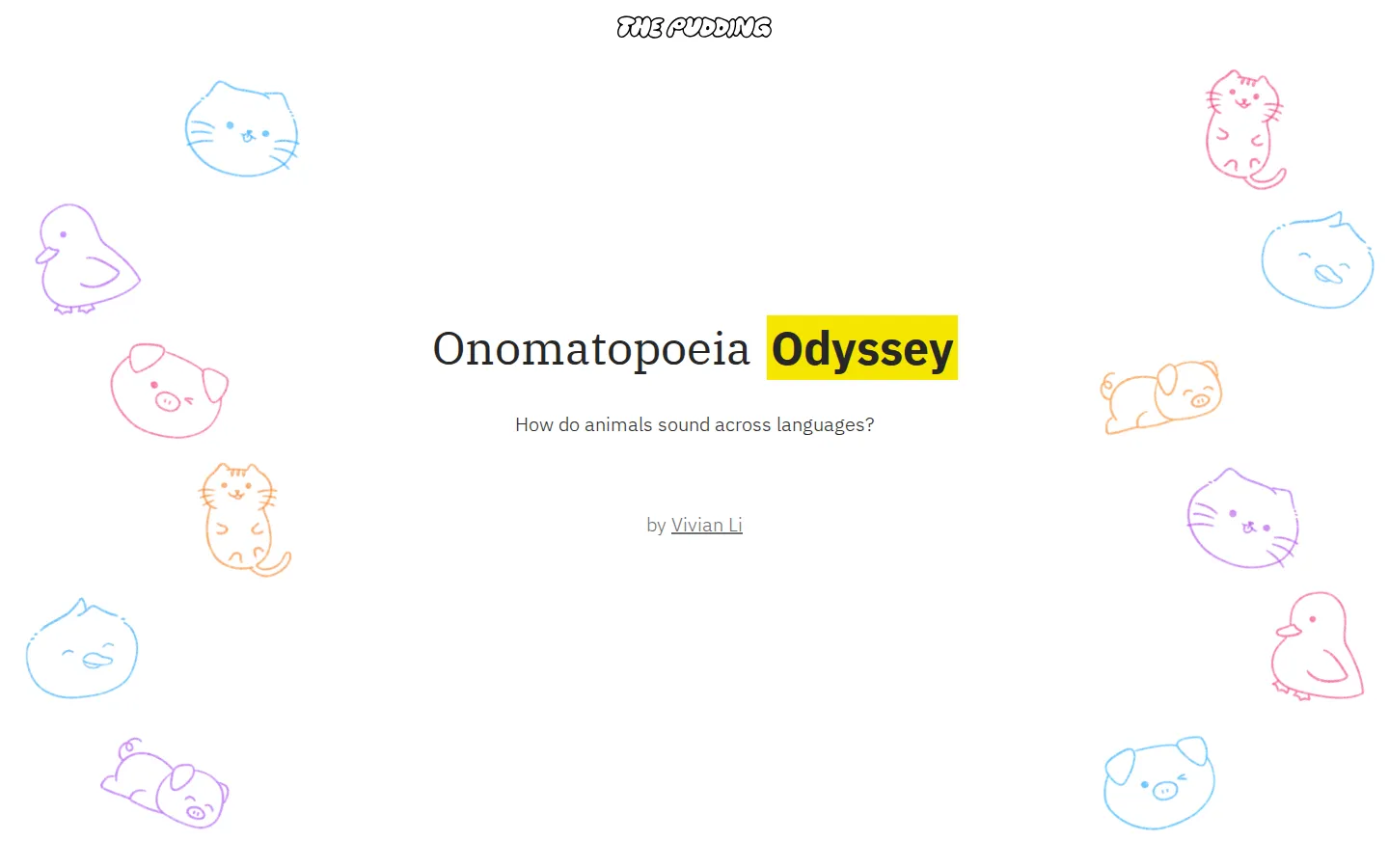
This compact visual essay compares how 21 languages write the sounds of cats, ducks, and pigs. IPA transcriptions and color-coded groupings turn familiar noises into patterns you can scan, while the visible methodology keeps the charming premise from pretending to be a complete dictionary.
What is How Animals Sound Across Languages?
The essay starts with the easy assumption that an animal makes one obvious sound, then lets language cheerfully ruin that simplicity. Cat, duck, and pig words are split into International Phonetic Alphabet phones, colored by related sound families, and gathered into bubble-chart summaries. Cats cluster around a recognizable nasal-and-vowel recipe; ducks and pigs scatter more widely. The result feels part illustrated field guide, part phonetics snack. Its strongest move is showing the ingredients, not just the punch line: the methodology names translation, transcription, and generated-audio sources and admits that each language had to be represented by a single selected word.
What you can do there
- Compare animal-sound words across 21 languages
- Read IPA transcriptions and phonetic groupings
- Listen to generated pronunciation examples
Why we picked it
A question fit for a children's song becomes a tidy lesson in how mouths, spelling systems, and conventions shape imitation. The animal doodles keep the subject playful, while the IPA breakdown gives each moo-adjacent syllable something more useful than novelty value.
How to get the most from it
Read one animal section at a time, compare the recurring colors before checking the author's pattern summary, and keep the IPA key nearby. Treat the audio as an optional pronunciation aid and the 21-language sample as a starting point, not a final census of how every speaker imitates an animal.
Good to know
The page openly says that some languages have several possible animal-sound words and that only one was selected for each example. Its recordings were generated with text-to-speech rather than collected from speakers. Audio playback, chart interaction, mobile behavior, accessibility, and the full transcription set were not independently tested.
Who made it, and when?
Vivian Li is the credited creator or organization. The earliest supported launch date we found is March 2025.
Creator’s official page Open How Animals Sound Across LanguagesMore like this
Nicky Case

Playable explanations about trust, systems, anxiety, networks, and the way people affect one another.
The Illustrated TLS Connection

TLS, unpacked until the handshake has nowhere left to hide.
Learn Git Branching

Git’s family tree, finally allowed to move while you poke it.
How DNS Works

A DNS lesson that takes the scenic route through the internet