
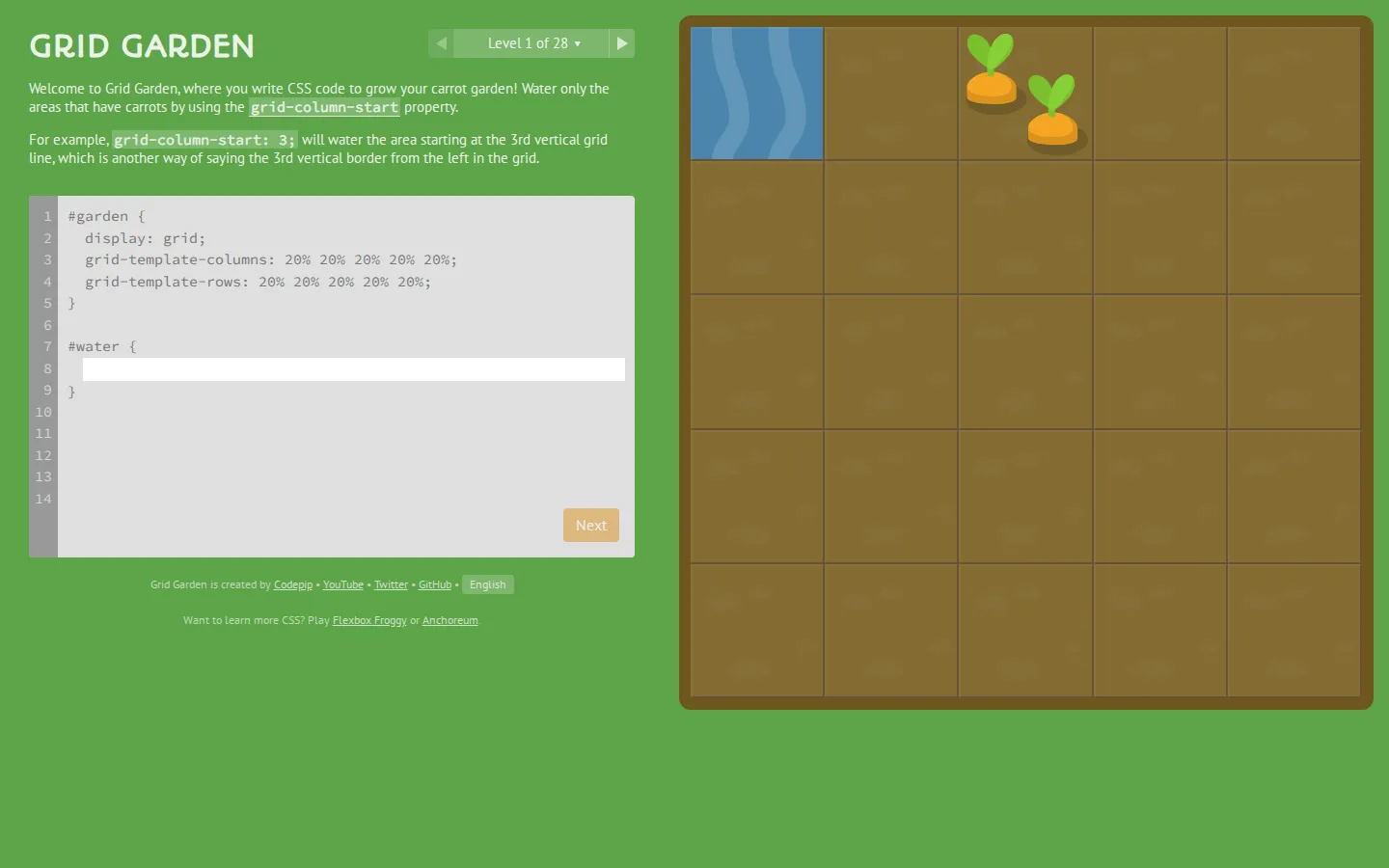
Grid Garden teaches CSS Grid with a vegetable patch and a code box. Each puzzle asks you to place water over carrots or poison over weeds by writing a real layout rule, turning rows, columns, spans, and shorthand into something you can see move.
What is Grid Garden?
The garden is a compact practice field for one of CSS's more slippery layout systems. A prompt sets the target, the editor takes your rule, and the plot shows whether the grid landed where it should. The early exercises build the basic map; later ones combine sizing and placement into puzzles that demand a little more than syntax recall. There are 28 levels, but the course stays breezy enough for a lunch-break refresher, and the level controls let a stuck gardener move on instead of composting the whole session.
What you can do there
- Write CSS Grid rules in the built-in editor
- Move water and poison across garden plots
- Advance through 28 layout puzzles
Why we picked it
The vegetable theme is not just garnish. It makes invisible layout tracks feel physical, and the fast connection between typed CSS and a changed garden gives dry documentation a satisfying little crunch.
How to get the most from it
Read the level's goal, enter only the CSS needed in the editor, and compare the result with the carrot or weed positions. If a shorthand feels mysterious, try equivalent values and use the level selector to revisit the idea later.
Good to know
The game is free, open source, and available in many languages. It teaches a useful slice of CSS Grid rather than every property, so keep a reference such as MDN nearby when you want the full specification or production edge cases.
Who made it, and when?
Thomas Park is the credited creator or organization. The earliest supported launch date we found is April 3, 2017.
Creator’s official page Open Grid GardenMore like this
Nicky Case

Playable explanations about trust, systems, anxiety, networks, and the way people affect one another.
The Illustrated TLS Connection

TLS, unpacked until the handshake has nowhere left to hide.
Learn Git Branching

Git’s family tree, finally allowed to move while you poke it.
How DNS Works

A DNS lesson that takes the scenic route through the internet