
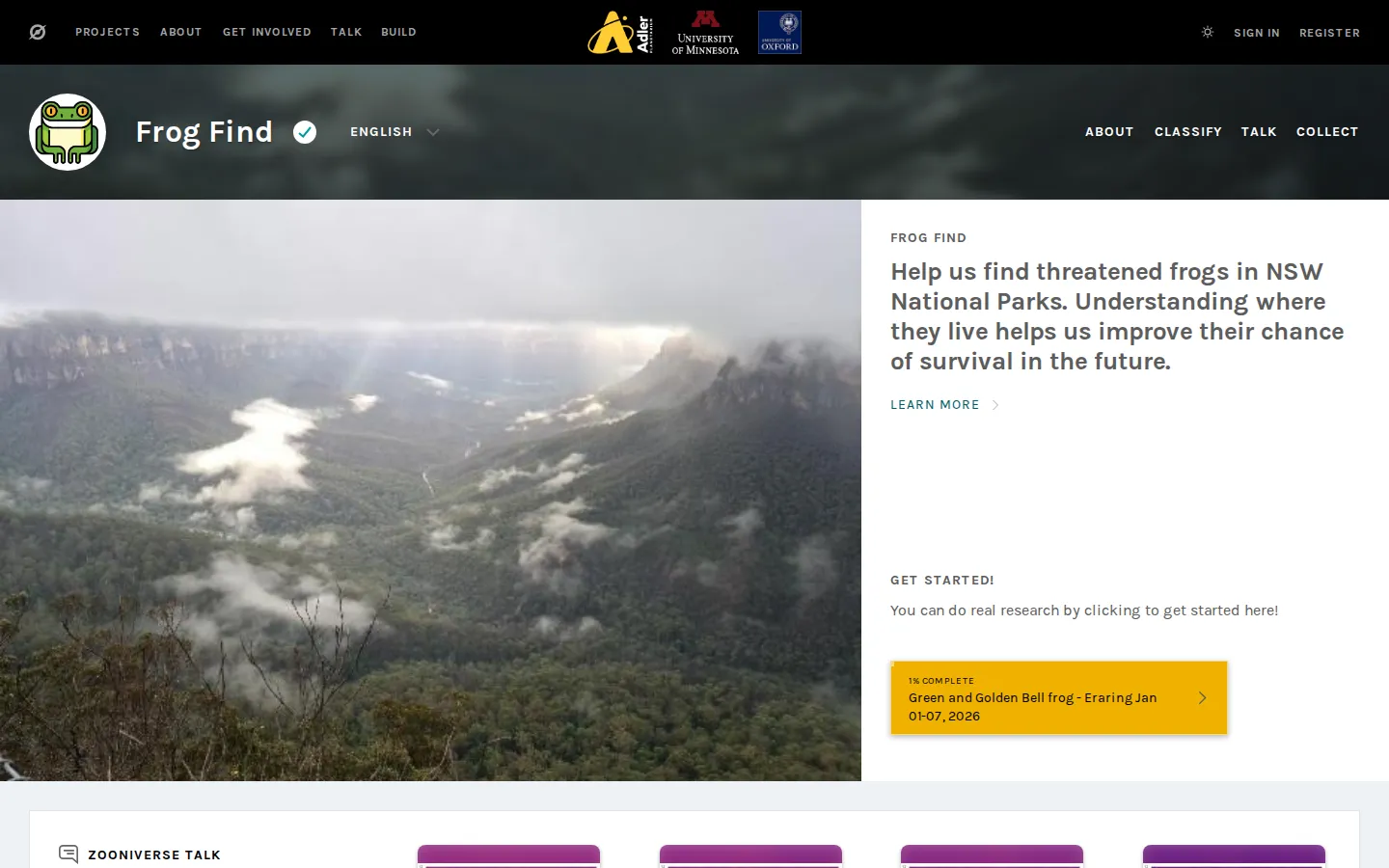
Frog Find turns field recordings from New South Wales into bite-size listening jobs. You learn a target call, hear a short slice of wetland or forest audio, and help separate a real frog signal from rain, traffic, silence, and the rest of the nocturnal choir.
What is Frog Find?
This is citizen science with headphones on. Researchers place acoustic monitors around likely frog habitat, then bring the resulting backlog to Zooniverse as short listening subjects. The useful answer is not always a triumphant croak: a quiet clip, a doubtful call, or an apparent absence can still help describe when and where species are active. Frog Find supplies call mnemonics, example recordings, quizzes, and a discussion route for puzzling audio. Multiple volunteers hear each subject before a consensus result is formed, and published research shows that versions of this workflow have also been used to check machine-selected BioMon clips against expert labels. That makes each tiny judgment one tile in a much larger acoustic map, not a standalone discovery claim.
What you can do there
- Listen to short habitat recordings
- Judge whether a target frog is calling
- Learn calls from species guides and examples
Why we picked it
Most nature projects ask for sharp eyes; Frog Find recruits the neglected other half of your field kit. The task is focused, learnable, and pleasantly humbling: after a few examples, a faint hoot or creak begins to sound less like background muck and more like a species clue.
How to get the most from it
Start with the Education call guides and their audio examples before opening a classification. Listen twice, compare the rhythm and pitch rather than chasing one syllable, and use the negative or skip option when the evidence stays muddy. If another species seems present, the project's Talk route is the place to attach that observation to the subject.
Good to know
Sound is essential, and some subjects deliberately contain no audible frog. The live landing page showed 96 percent complete while its active subject and classification counters were zero, so a classification may not always be available. Current workflow, signup, device, and accessibility behavior were not interactively tested. The project's FAQ describes several reviews per file; one later BioMon study used eight, so do not treat a single volunteer answer as the final scientific label.
Who made it, and when?
Conservation Science Research Group at the University of Newcastle is the credited creator or organization. The earliest supported launch date we found is September 14, 2021.
Creator’s official page Open Frog FindMore like this
Nicky Case

Playable explanations about trust, systems, anxiety, networks, and the way people affect one another.
The Illustrated TLS Connection

TLS, unpacked until the handshake has nowhere left to hide.
Learn Git Branching

Git’s family tree, finally allowed to move while you poke it.
How DNS Works

A DNS lesson that takes the scenic route through the internet