
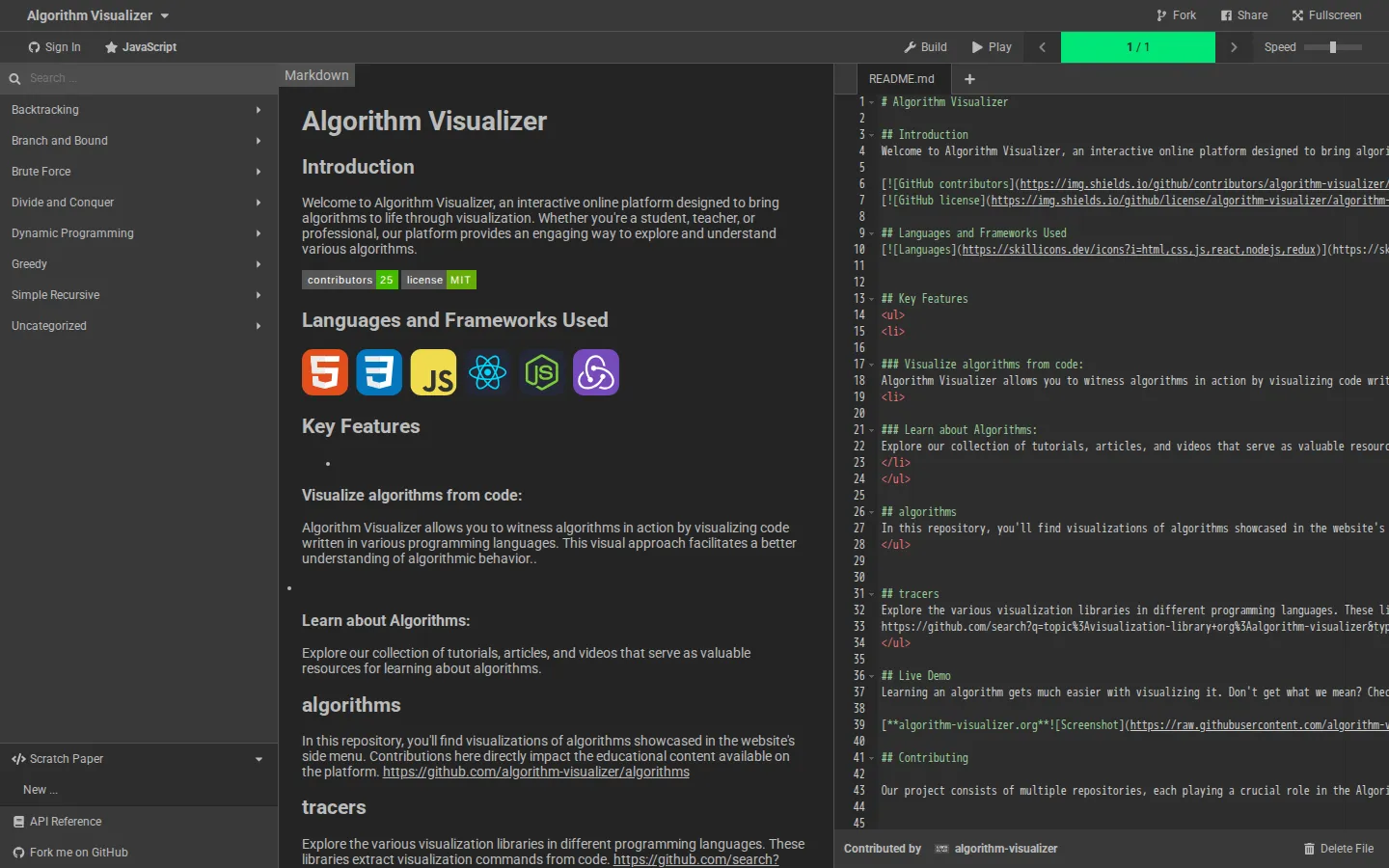
Algorithm Visualizer is a web project built around the idea that code becomes easier to reason about when you can watch its structure take shape. Its public project materials connect the site to a collection of algorithm examples and the tooling that turns program behavior into visuals.
What is Algorithm Visualizer?
Algorithms are often taught as tidy snippets and then left to perform their little miracles offstage. Algorithm Visualizer brings that backstage work forward. The project pairs code with visual behavior, aiming to make the movement of an algorithm easier to follow than a static listing alone. Its open project structure is part of the appeal: the web app, the algorithm collection, and the visualization libraries are all visible as separate pieces of the same learning machine. That makes it a pleasant detour when a sorting routine, graph walk, or recursive idea feels more like a spell than a sequence of decisions.
What you can do there
- Explore algorithm visualizations
- Connect code with visual behavior
Why we picked it
It gives abstract program flow something to lean on. Rather than asking visitors to trust that a few lines of code will make sense after enough rereading, the project is organized around seeing the behavior that those lines describe.
How to get the most from it
Choose one algorithm you are already trying to understand and use the visuals as a companion to its code, not a replacement for reading it. Pause to predict the next change before consulting the next step; the comparison is often where the idea starts to stick.
Good to know
This run confirmed the destination and its open project materials, but not a live visualization session. Treat any specific interaction, language support, performance expectation, or current feature list as something to verify in the app before relying on it for a lesson or demo.
Open Algorithm VisualizerMore like this
Nicky Case

Playable explanations about trust, systems, anxiety, networks, and the way people affect one another.
The Illustrated TLS Connection

TLS, unpacked until the handshake has nowhere left to hide.
Learn Git Branching

Git’s family tree, finally allowed to move while you poke it.
How DNS Works

A DNS lesson that takes the scenic route through the internet