
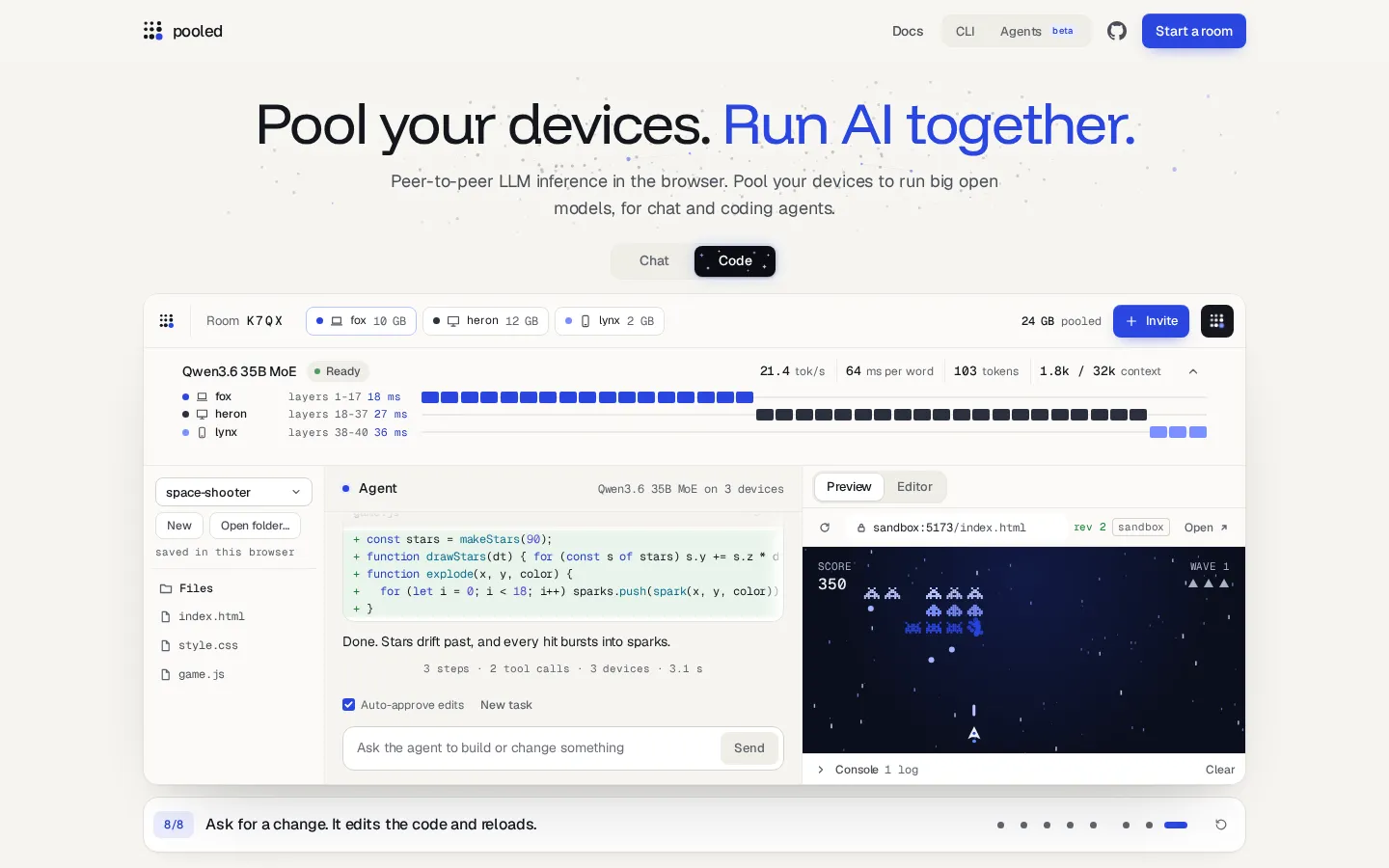
Pooled lets several trusted devices run one open language model together through browser tabs. A host creates a room, laptops and phones lend memory, the model is divided into layer ranges, and the group can chat with it or switch to a coding workspace that writes and previews small web projects.
What is Pooled?
The landing page explains distributed inference with a surprisingly legible little play: make a room, invite a desktop and phone, total the available memory, pick a model that fits, watch its layers get dealt across the devices, then send a question through the chain. Code mode adds a file list, edit history, console, and sandboxed preview, so the same pooled model can build a small browser project and revise it after a follow-up. The clever part is not free compute from strangers; it is making your own mismatched pile of hardware cooperate without installing a native stack on every participant. More devices mainly buy memory for a larger model. They do not magically erase network delay.
What you can do there
- Start or join a room from several devices
- Pool GPU memory to load a larger open model
- Chat with the room model or use Code mode
Why we picked it
Pooled turns a fairly thorny systems idea into something a curious person can understand from one page. The room metaphor, visible memory pledges, layer assignments, and per-device timing make the machinery feel inspectable. It is a rare technical demo whose interface teaches the architecture while inviting you to try it.
How to get the most from it
Start with devices you own or people you already trust. Open a room on the strongest computer, join a second device with the invite link, lend conservative amounts of memory, and choose the smallest model that proves the setup works. Keep every device awake and on a fast local network. Test ordinary chat before Code mode, and leave real folders behind approval prompts until the room has earned your confidence.
Good to know
A contributing browser needs WebGPU, enough memory and disk for its assigned weights, and a current supported browser; chat-only devices can join without lending layers. Model downloads can be large, and every token crosses the devices holding layers, so Wi-Fi latency matters. Treat the room as shared, not private: computing peers may recover prompts, alter results, and see one another's IP addresses unless traffic uses a relay. The project itself advises trusted participants only. No live room was rendered during this review, so current speed and recovery behavior remain unverified.
Who made it, and when?
Nehanth is the credited creator or organization.
Creator’s official page Open PooledMore like this
Excalidraw

A fast whiteboard whose hand-drawn look makes unfinished ideas feel welcome.
ExplainShell

A plain-English map for the flags hiding inside a shell command.
Same Energy

A visual-search rabbit hole for when words are too blunt
Nice Game Hints

A polite little lantern for when a game puzzle eats the trail.