
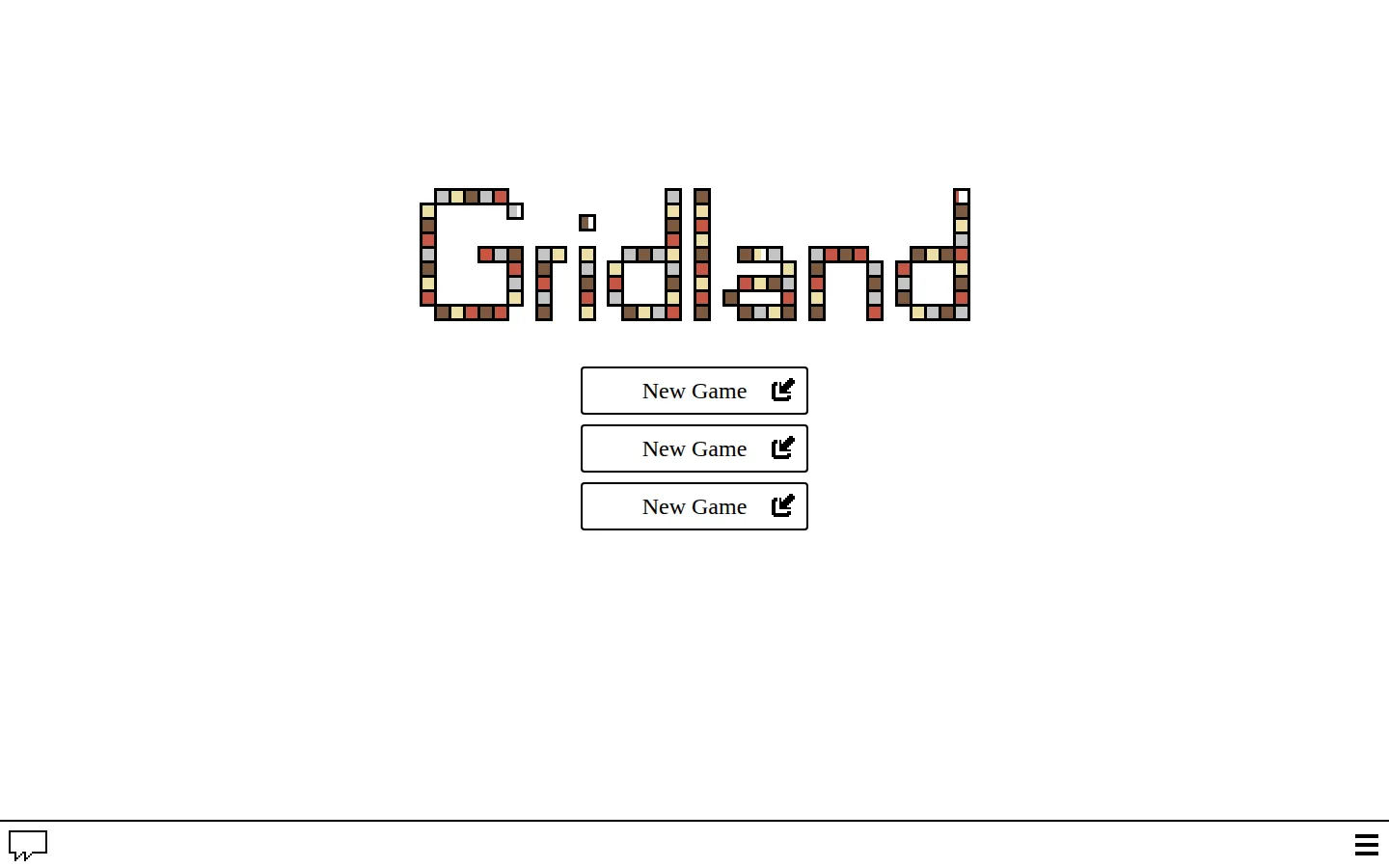
Gridland folds resource matching, village building, and night-time survival into one deliberately wordless browser game. Daylight rewards useful combinations; darkness makes the same board feel considerably less friendly.
What is Gridland?
Gridland begins with the familiar pleasure of lining up tiles, then quietly changes what those matches mean. In daylight, resources feed a tiny settlement above the board. When night arrives, planning shifts toward weapons, protection, and avoiding combinations that invite more trouble than your little builder can handle. Time advances with each move, so the tension comes from choices rather than frantic clicking. The game explains very little in prose; its icons, meters, and changing sky expect you to learn by watching cause and effect.
What you can do there
- Match resource tiles during the day
- Build up a tiny settlement
- Prepare defenses for the night
Why we picked it
The day-to-night switch gives a well-worn puzzle format an unusually sharp personality. A harmless resource cascade can help the village now and leave a dreadful board for later, making each match feel like both progress and a tiny piece of future planning.
How to get the most from it
Start slowly and watch what each daytime resource changes above the grid. Before dusk, think about the tiles that will become useful defenses, and remember that making another move advances the clock.
Good to know
Gridland is free on the web and intentionally sparse on written guidance. Its pleasure comes from decoding the visual rules, so it is a better fit for patient experimentation than for a quick, fully explained puzzle break.
Who made it, and when?
doublespeak games is the credited creator or organization. The earliest supported launch date we found is August 25, 2014.
Creator’s official page Open GridlandMore like this
Little Alchemy 2

Combine simple elements until your small world contains everything from rain to robots.
TinyFingers

A tiny digital decoy for the child who has declared your keyboard public property.
PlayingCards.io

A shared card table that trusts your group to know the rules.
AI Magnate

Run a fictional AI lab where every breakthrough comes with a burn-rate headache.