
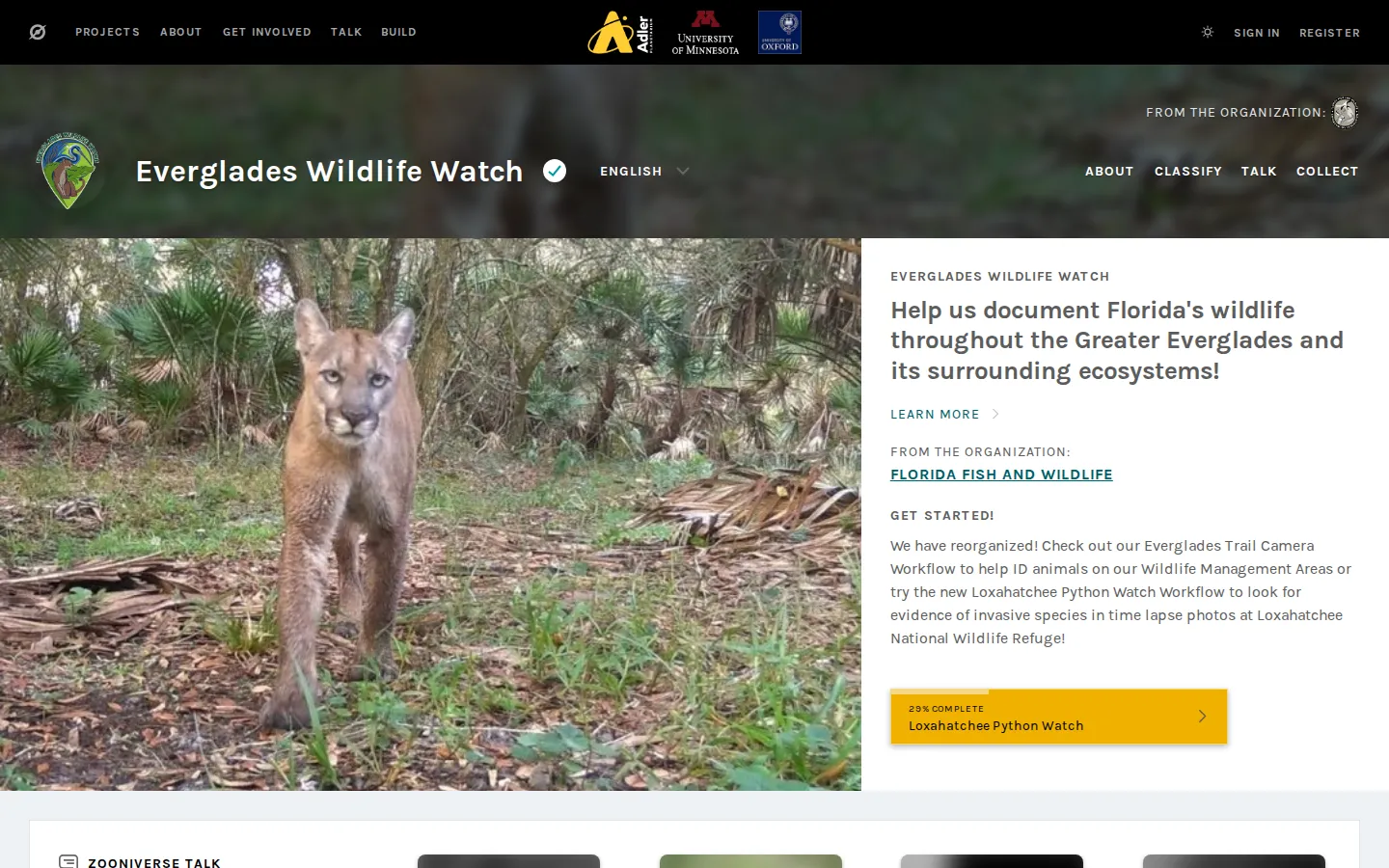
Everglades Wildlife Watch hands the photo backlog from South Florida trail cameras to anyone willing to look closely. Participants identify animals, combine their judgments with a larger volunteer crowd, and help FWC biologists track wildlife across public lands. The project has produced documented conservation uses, though available workflows can shift as image batches are completed or reorganized.
What is Everglades Wildlife Watch?
A branch moves, two eyes catch the infrared flash, and suddenly you are doing more than scrolling past an animal photo. Everglades Wildlife Watch turns camera-trap images from South Florida public lands into bite-size classification work. Field staff and volunteers maintain cameras across habitats ranging from sawgrass marsh to pine flatwoods; online participants inspect the uploads and identify the species they can see. The agency combines many judgments so one uncertain click does not have to carry the record alone. That pile of patient looking has practical destinations. Project updates describe classifications supporting panther and bobcat health monitoring, mammal inventories, high-water response, and wildlife-management decisions. There is a dashboard and a collection of notable images for visitors who want the payoff as well as the task. The page now points to reorganized trail-camera and invasive-python workflows, so the exact assignment waiting behind Get Started may vary. Even when a batch is finished, the research and results sections remain a useful window into how crowd labor moves from muddy camera straps to management evidence.
What you can do there
- Identify wildlife in South Florida trail-camera photographs
- Review project results and community discussions
Why we picked it
The reward arrives in two sizes: the immediate little jolt of recognizing a night-creature silhouette, and the slower satisfaction of knowing those identifications can spare biologists hours of sorting. The project also shows its work, connecting volunteer clicks to named inventories, monitoring efforts, and a public results dashboard.
How to get the most from it
Read the short project guide before classifying, then zoom in on shape, markings, scale, and context instead of guessing from the first impression. Use an unsure option when available, and check Talk or the results pages when a strange frame sends you down a species rabbit hole. Expect workflows to change as batches fill up.
Good to know
FWC's original instructions describe a free account for participation, but the current sign-in boundary was not tested. Live classifications, consensus feedback, mobile behavior, accessibility, image quality, and audio were also not exercised. The main page's server-readable counters currently conflict with the project's dated results, and FWC has since launched a broader statewide Wildlife Watch, so treat workload and progress numbers as moving targets.
Who made it, and when?
Florida Fish and Wildlife Conservation Commission is the credited creator or organization. The earliest supported launch date we found is April 9, 2024. A documented update was recorded December 2025.
Creator’s official page Open Everglades Wildlife WatchMore like this
Zooniverse

Help real research by classifying galaxies, wildlife, weather records, manuscripts, and more.
StopotS

A fast little word scramble where your friends become the jury
Mandalagaba

A symmetry sketchpad where one stroke recruits a whole geometry crew
Kick the Ball Back

A tiny football emergency, one dragging foot, and several children who have no time for excuses.