
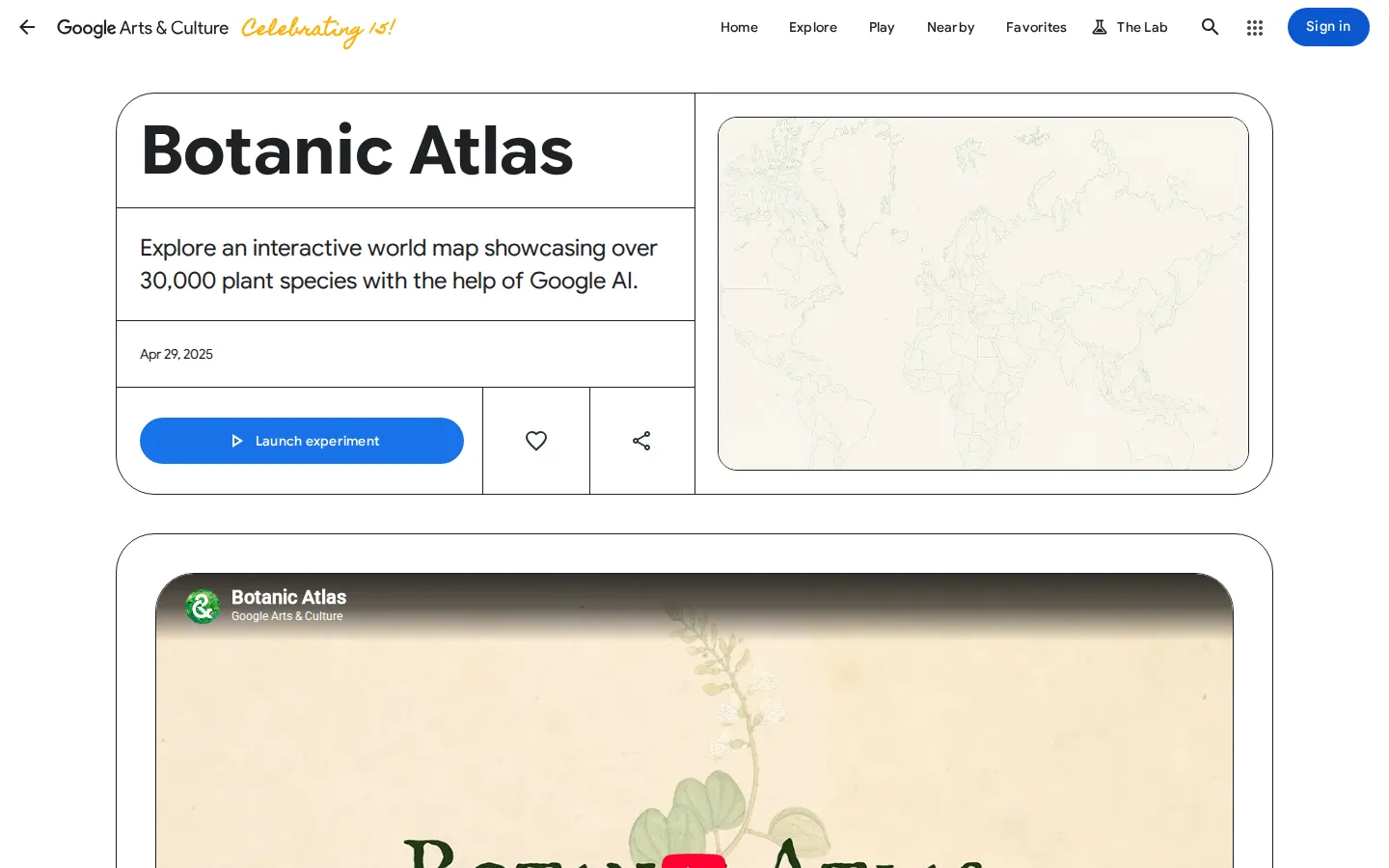
Botanic Atlas turns a huge digitized herbarium into a map-led browse: search for a plant, choose a country, and follow specimen records into the botanical weeds. The scale is the hook; the best habit is to treat its AI-written context as a signpost and the collection metadata as the sturdier trail.
What is Botanic Atlas?
The experiment treats geography as the index to an enormous cabinet of dried plants. Its current page offers a plant search and a world-map route into nearly 450,000 digitized specimens spanning more than 30,000 species. The material comes from the Botanical Research Institute of Texas, Brazil's CRIA, and Cambridge University Herbarium. Independent launch reporting says country pages lead to specimen images and records with collector, herbarium, and date details, while Gemini supplies short contextual descriptions. That mix makes Botanic Atlas part atlas, part cabinet drawer: broad enough for a lazy wander, but specific enough to send a curious visitor down a satisfyingly narrow taxonomic side street.
What you can do there
- Browse plant specimens by country
- Search for a plant species
- Inspect specimen records and AI-generated context
Why we picked it
A globe is an unusually inviting front door for herbarium data that would otherwise feel like a wall of accession numbers. Botanic Atlas keeps the thrill of scale without severing the thread back to individual specimens. It works best as a curiosity engine, with enough provenance fields to keep the AI layer from becoming the whole story.
How to get the most from it
Use the map when you want serendipity and the search box when you already have a plant in mind. On a specimen page, read the collector, herbarium, date, and image details before leaning on the generated summary. A country you know well is a good first stop; familiar geography makes the strange leaves easier to notice.
Good to know
The map runs inside Google Arts & Culture's embedded experiment shell, and the current response blocks third-party framing. Accessibility, device behavior, sound, motion, account prompts, and performance are not documented here. AI descriptions are useful orientation, not a substitute for botanical identification or expert advice.
Who made it, and when?
Google Arts & Culture is the credited creator or organization. The earliest supported launch date we found is April 29, 2025.
Creator’s official page Open Botanic AtlasMore like this
OneZoom Tree of Life

Zoom through the evolutionary tree connecting millions of living species.
WindowSwap

Borrow someone else's window for a quiet view of another life and place.
OCEARCH Shark Tracker

A map where each dot has teeth and a travel itinerary
Is it dark outside?

A one-word verdict for a question your window could answer