
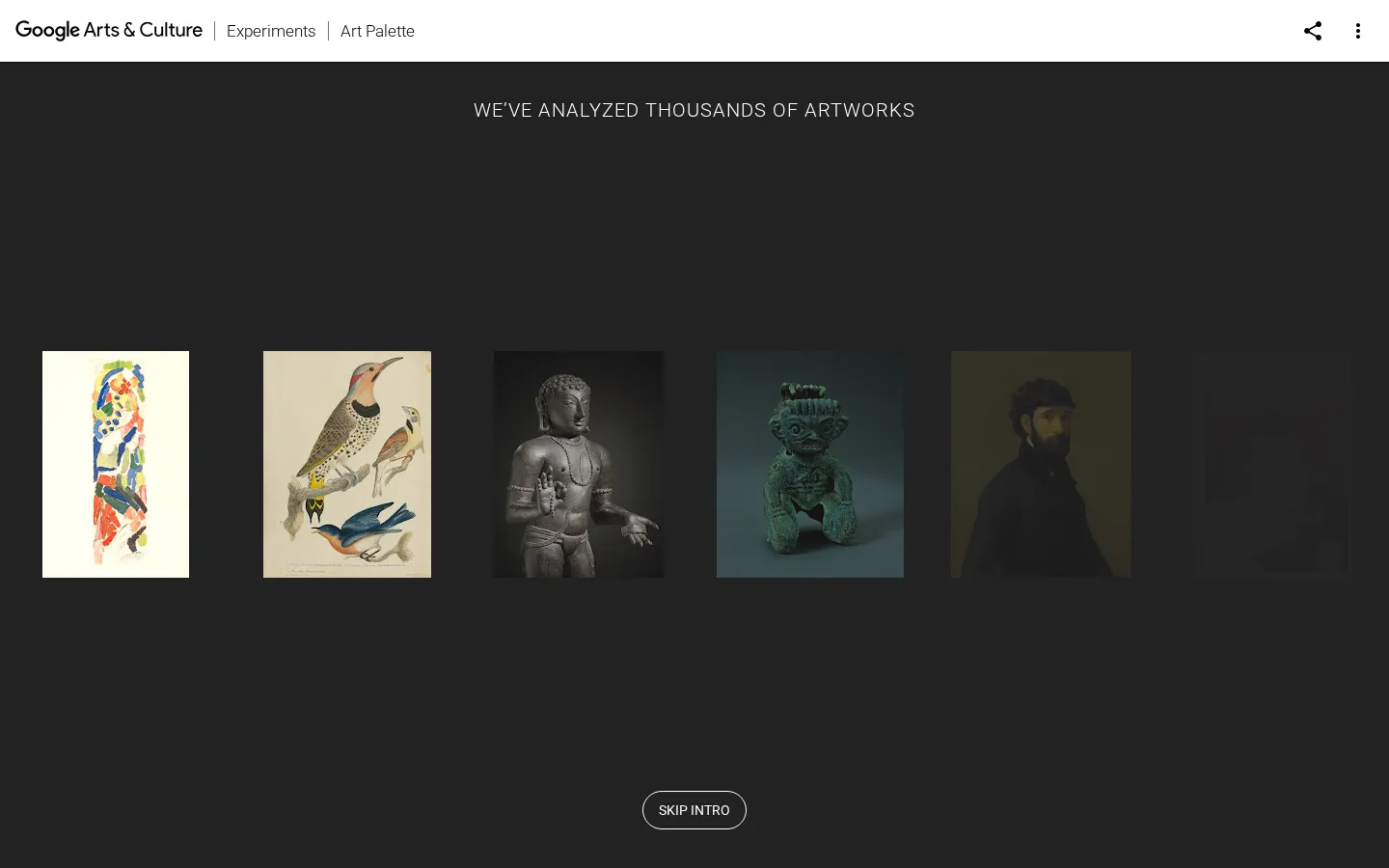
Art Palette turns a five-color combination, or colors pulled from an image, into a wall of artworks connected by hue. It is a quick way to chase a mood across periods and collections, with color doing the curatorial mischief instead of names, dates, or movements.
What is Art Palette?
Choose five colors and Art Palette points toward works that share their visual temperature. The arrangement favors surprising neighbors: a familiar painting can sit beside a folio, print, photograph, or object from another century simply because their colors rhyme. A fixed-palette result exposes named works and detail links, while the landing page also offers a camera or file-upload route for borrowing colors from the world around you. The premise is narrow in the best way; it turns a giant collection into something that feels closer to rifling through a very well-stocked paint box.
What you can do there
- Choose a five-color palette
- Start from a camera photo or uploaded image
- Browse artworks connected by color
Why we picked it
Most art databases begin with an artist, place, period, or keyword. Art Palette hands the first move to color, producing connections that can be useful for a design brief and pleasantly odd for an aimless browse. The five-swatch constraint keeps the idea legible instead of burying it beneath a professional color tool.
How to get the most from it
Begin with Surprise Me to understand the kind of connections the tool makes. Then adjust one swatch at a time and follow a work's detail link when an unexpected match catches your eye. Use From an image when you already have a room, outfit, poster, or photograph whose colors you want to chase through art.
Good to know
The camera route displays a consent notice saying that a palette from the photo is sent to Google for matching and that only the colors are kept for the duration of the search. If you would rather not send image-derived colors, use the manual swatches or Surprise Me. The linked public code repository is archived and covers only part of the implementation, even though the experiment itself remains reachable.
Who made it, and when?
Simon Doury and Etienne Ferrier is the credited creator or organization.
Creator’s official page Open Art PaletteMore like this
Zoomquilt
An endlessly falling illustrated world nested inside itself.
Thisissand

Pour tiny grains of color into layered landscapes, patterns, and patient accidents.
Click Click Click

A green button that turns browser habits into a tiny surveillance drama.
Beige balls

Twelve colorful-looking spheres, one beige reality, and a tidy lesson in how nearby stripes boss your eyes around.