
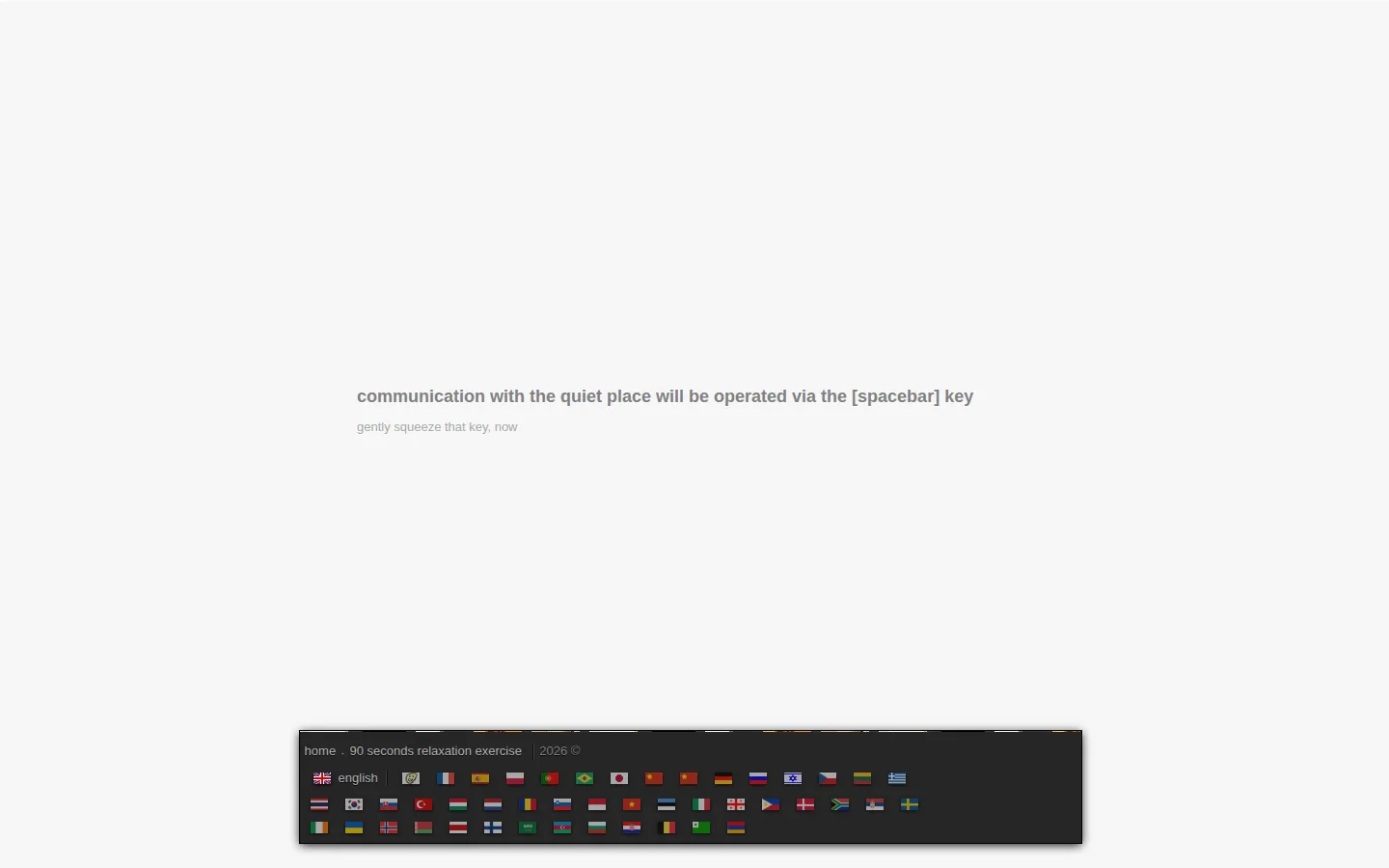
The Quiet Place Project slows one corner of the browser to a crawl. Spacebar presses or gentle taps move through a lowercase monologue about notifications, stillness, and taking a real break, accompanied by music and one deliberately uneventful pause.
What is The Quiet Place Project?
This is less a relaxation app than a small piece of interactive writing with excellent timing. It asks you to silence the phone, turn up the speakers, and advance one thought at a time with the spacebar or a tap. The text names the messages, likes, check-ins, and updates that keep tugging at attention, gets briefly sharp about their importance, then asks you to do nothing for 30 seconds. Lowercase lines, music, darkness, and forced pacing turn a very simple page into a compact ceremony for leaving the feed alone. When it finally says goodbye, returning to the rest of the internet feels oddly loud.
What you can do there
- Advance a text-led pause with the spacebar or touch
- Silence notifications and sit through a short stillness prompt
- Listen to the accompanying music
Why we picked it
Most pages compete for attention by adding things. This one wins by removing them, then uses a single key, a little sarcasm, and an actual patch of waiting to make the absence feel intentional.
How to get the most from it
Give it the conditions it asks for: silence the phone, use headphones or speakers, and let the page take over a few uninterrupted minutes. Press space or tap at its pace instead of racing through the words. The companion 90-second exercise is there when you want the idea stripped down even further.
Good to know
Music is part of the intended experience, fullscreen is suggested rather than required, and mobile visitors are prompted toward landscape orientation. The piece contains one mild profanity. It can be a pleasant pause, but it is not therapy or crisis support.
Who made it, and when?
Amitay Tweeto is the credited creator or organization. The earliest supported launch date we found is 2011.
Creator’s official page Open The Quiet Place ProjectMore like this
myNoise

Shape richly recorded soundscapes with sliders instead of accepting generic background noise.
Pixel Thoughts

Place one worried thought inside a star and watch the universe give it some scale.
A Soft Murmur

Mix rain, thunder, waves, birds, wind, and café noise into your own quiet background.
I Miss the Office

For when your home office is missing the printer, the chatter, and perhaps one squeaky chair too many.