
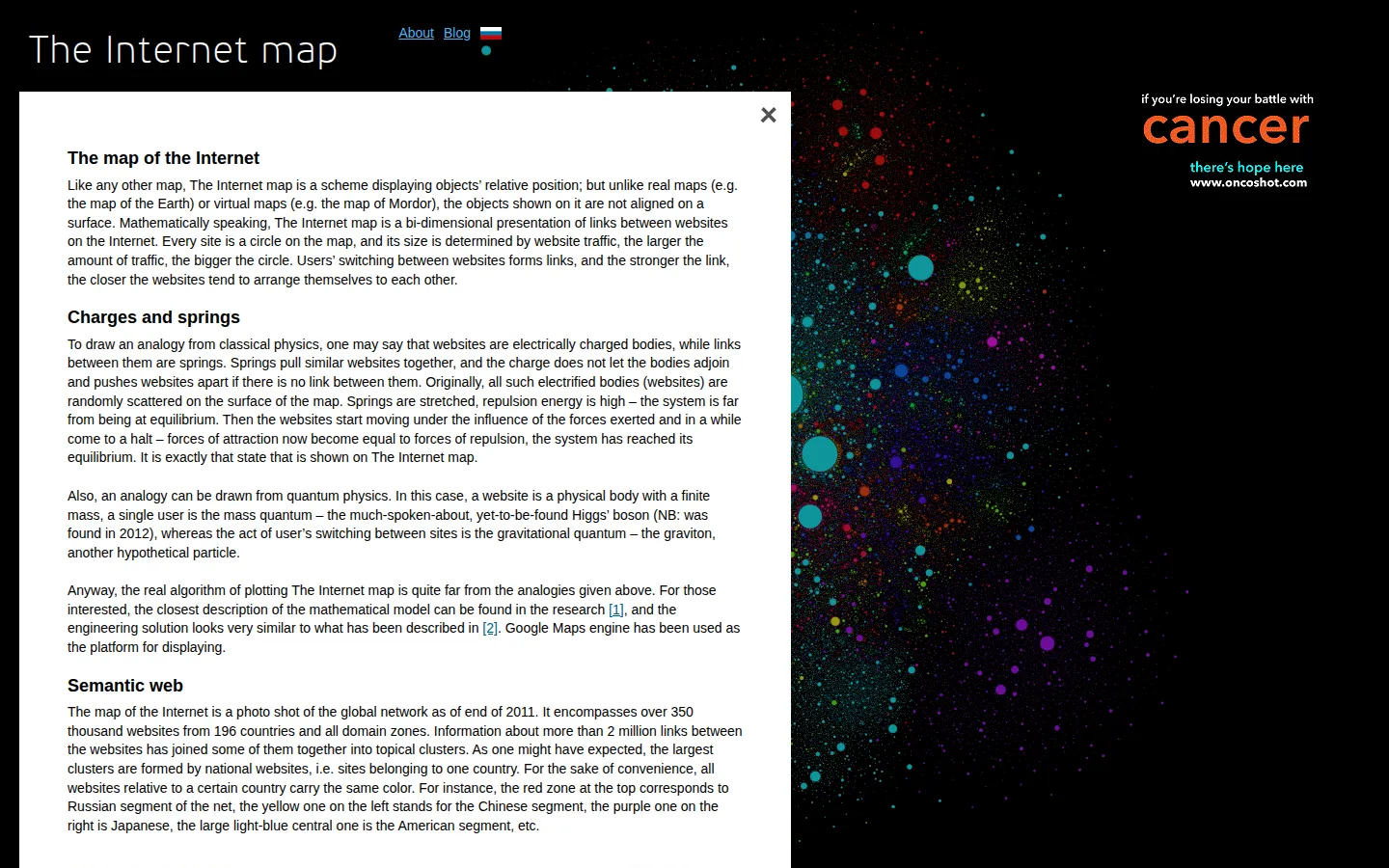
The Internet Map turns a historical view of the web into a field of colored bubbles: look up a site or country, then wander the clusters around it. It is more cartographic daydream than current network dashboard, so enjoy the patterns rather than treating it as a live ranking.
What is The Internet Map?
A site-address-or-country search box is your pin on this peculiar atlas. Start with a domain you know, then follow the surrounding neighborhood of dots and color bands. Independent descriptions explain the visual grammar: larger bubbles stand for relatively busier sites, color marks a country, and nearby bubbles indicate stronger web connections. The result is less like reading a list and more like poking through an old drawer of internet geography. The page itself is delightfully spare, leaving the map to do the talking.
What you can do there
- Search for a site or country
- Browse map clusters
Why we picked it
It gives the web a shape you can inspect instead of merely searching. The historical angle is part of the charm: familiar names become landmarks, and the clustered view makes the old web feel like a place with neighborhoods rather than an endless results page.
How to get the most from it
Search for a site address or country, then compare its nearby bubbles and colored cluster with places you already recognize. Bring a little curiosity and a few minutes; the fun is in wandering sideways from a familiar landmark.
Good to know
Independent coverage ties this visualization to a 2011 snapshot and describes the project as dating from 2012, so it is best treated as a historical exploration rather than current web data. Touch, keyboard, and mobile support could not be confirmed in this run.
Who made it, and when?
Ruslan Enikeev is the credited creator or organization.
Open The Internet MapMore like this
The Pudding

Visual essays that use code, data, and interaction to explain culture unusually well.
Earth Nullschool

A living globe of wind, weather, ocean currents, and atmospheric motion.
The True Size Of…

Drag countries around the map and watch familiar size comparisons fall apart.
MapCrunch

Drop into a random street-level view somewhere in the world and figure out where you landed.