
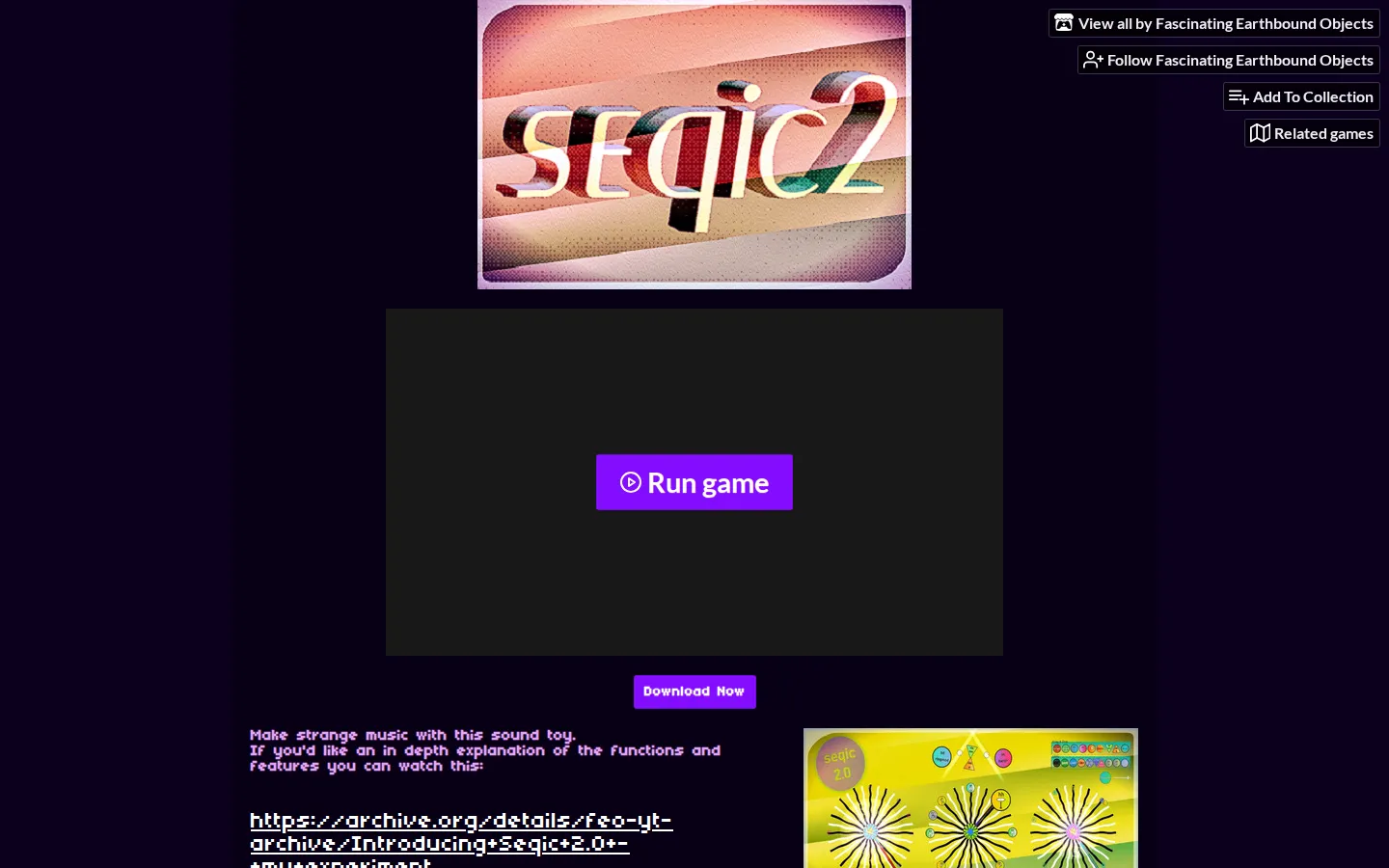
Seqic 2.0 is a musical toy disguised as a tiny kinetic laboratory. Notes and drums orbit through trigger wheels while a wandering ball nudges the arrangement toward useful accidents.
What is Seqic 2.0?
Instead of asking for a blank timeline and a plan, Seqic hands you moving parts. Drop musical events into rotating systems, play notes from the keyboard, and let the roaming ball stir in changes you did not schedule. The result sits somewhere between a step sequencer, a marble toy, and a neon control panel found behind the DJ booth. Its charm comes from that tug-of-war: you can shape the loop, but the machine keeps a small vote. The interface is deliberately busy, so the first few minutes are better spent experimenting than hunting for perfect technique.
What you can do there
- Arrange note and drum triggers
- Steer randomness into an evolving loop
- Adjust musical events with mouse and keyboard
Why we picked it
Most music tools hide randomness behind menus. Seqic puts chance on the stage as a moving participant, then gives you enough handles to bargain with it. That makes even an untidy first attempt feel like play instead of setup.
How to get the most from it
Start with a few notes or drum hits rather than filling every wheel. Listen for one full rotation, move an event, then introduce the wandering ball and octave or mute changes once the basic loop makes sense.
Good to know
Sound is the whole point, so headphones or speakers are essential. The browser version and a name-your-own-price Windows download are available; the dense moving interface may take patience, and current mobile and accessibility support are unverified.
Who made it, and when?
Fascinating Earthbound Objects is the credited creator or organization.
Creator’s official page Open Seqic 2.0More like this
Radio Garden

Spin the globe and tune into live radio stations almost anywhere on Earth.
Chrome Music Lab

Friendly musical experiments that explain rhythm, melody, sound waves, and harmony by letting you play.
Blob Opera

Conduct four cheerful blobs whose vowel-shaped voices turn almost any gesture into opera.
Patatap

Turn every letter key into a synchronized burst of sound and animation.