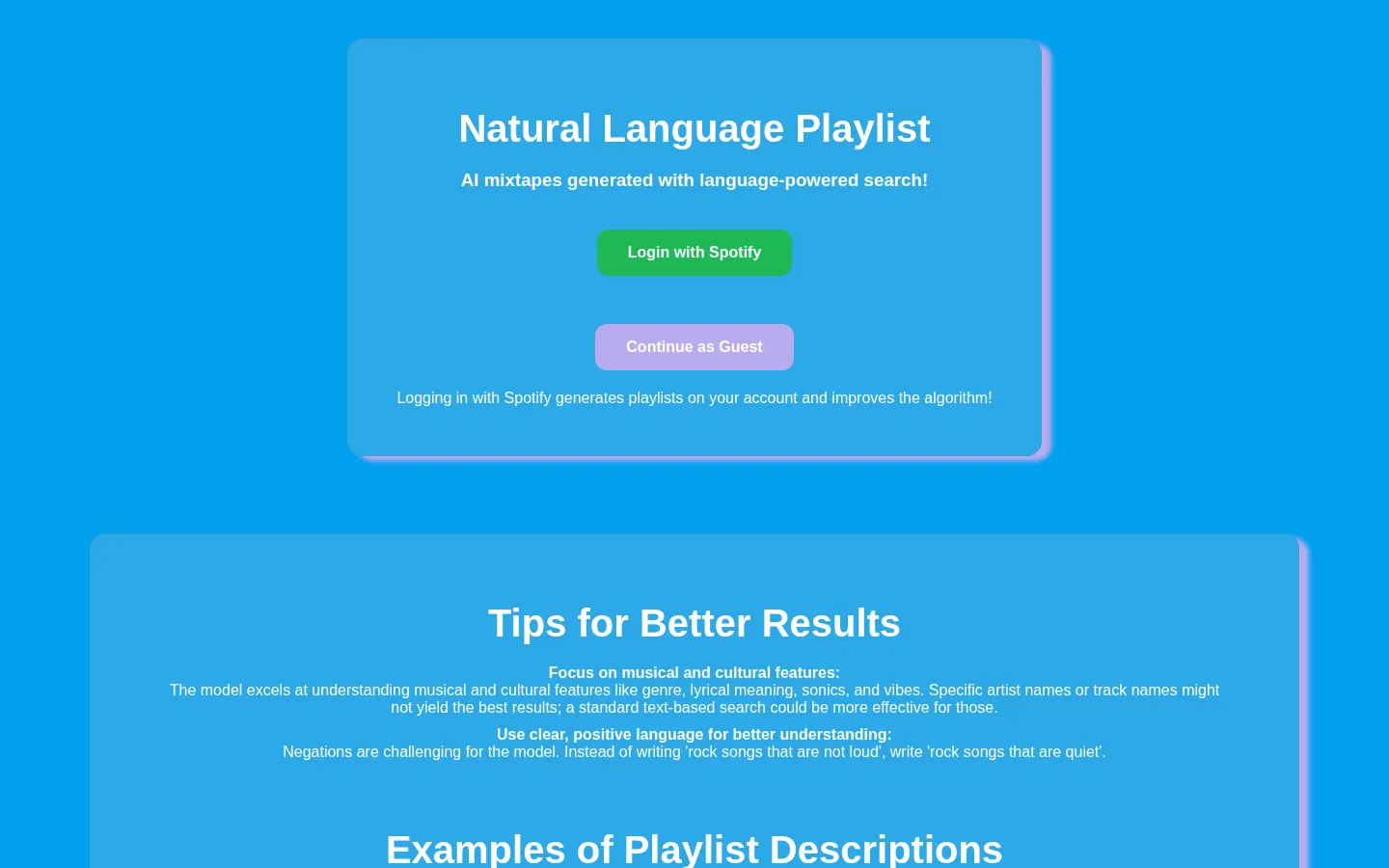
Natural Language Playlist makes mixtapes from sentences instead of artist searches. It offers a guest route and a Spotify-connected route, then encourages visitors to describe the sound, culture, or emotional weather they want to hear.
What is Natural Language Playlist?
This is a music finder for people whose best search terms arrive as miniature scenes. Rather than begin with a band name, the site asks for musical and cultural clues: sonics, genre, lyrical meaning, vibe. Its own tips steer visitors toward clear, affirmative descriptions and away from requests built around what they do not want. That turns playlist-making into a small writing exercise before it becomes a listening session. The interface is refreshingly direct. Choose guest use or connect Spotify, describe the desired territory, and let the service assemble a route through it. The best fit is discovery: naming an atmosphere, an odd genre crossroads, or a lyrical preoccupation, then seeing what songs gather around it.
What you can do there
- Describe a musical mood or theme
- Generate a playlist
- Choose guest use or Spotify sign-in
Why we picked it
It treats a playlist request as a description problem instead of a filing problem. That little shift makes the site useful when standard search boxes feel too literal and you have a feeling for the music but no precise name for it.
How to get the most from it
Write a specific, affirmative description with several musical or cultural clues. Start with mood, energy, genre, or lyrical territory rather than a single artist or track, then refine the wording if the first pass feels too broad.
Good to know
Guest use is available, while Spotify sign-in is presented as the path for creating playlists in your account. The site says exact artist and track searches may work better in a standard music search, and that negations can be harder for it to interpret.
Who made it, and when?
Abelardo Riojas is the credited creator or organization.
Open Natural Language PlaylistMore like this
Radio Garden

Spin the globe and tune into live radio stations almost anywhere on Earth.
Chrome Music Lab

Friendly musical experiments that explain rhythm, melody, sound waves, and harmony by letting you play.
Blob Opera

Conduct four cheerful blobs whose vowel-shaped voices turn almost any gesture into opera.
Patatap

Turn every letter key into a synchronized burst of sound and animation.