
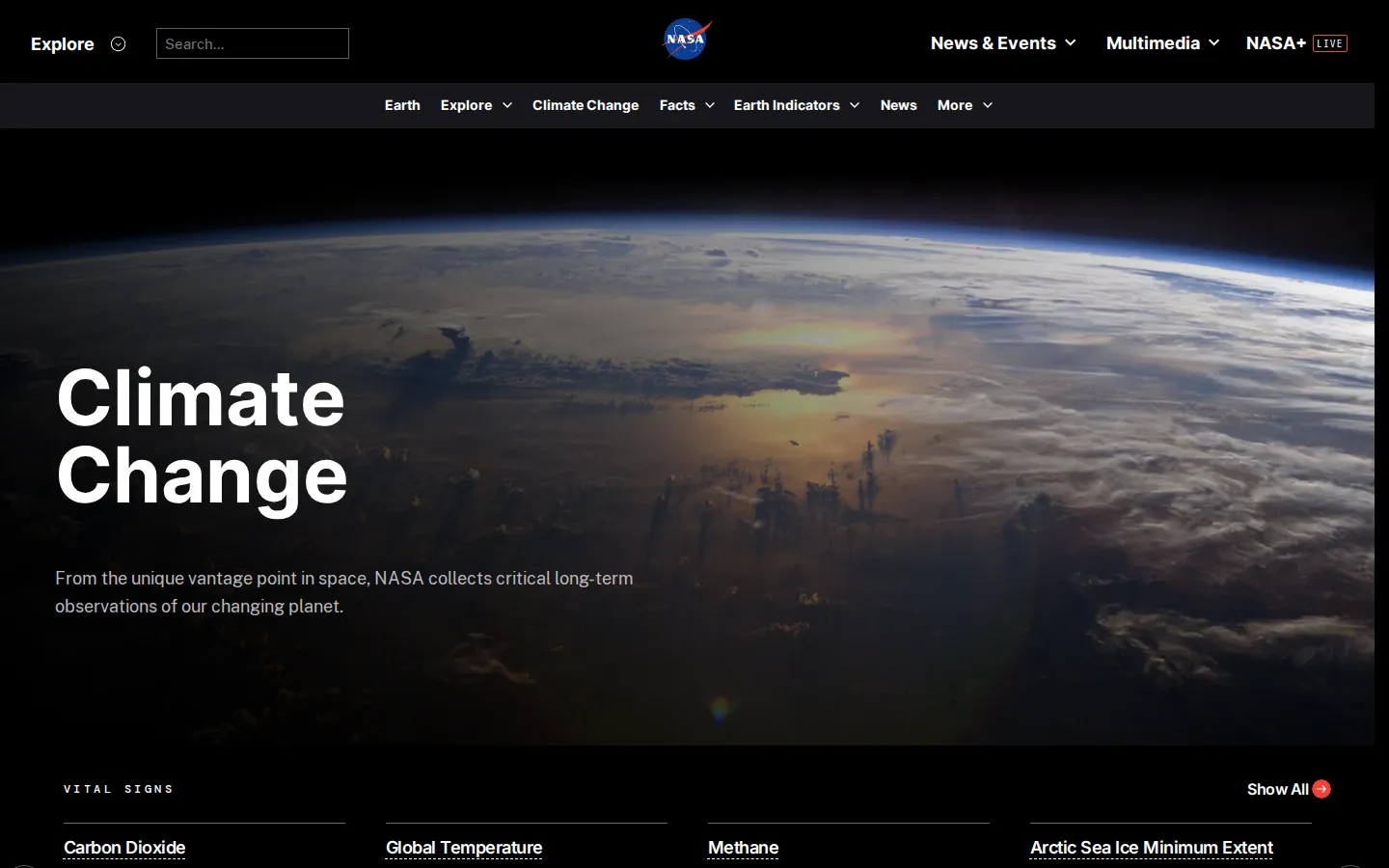
NASA’s Climate Change page is a broad reference hub, not just the standalone Time Machine its old reputation may suggest. It organizes the science into clear routes for evidence, causes, effects, seven Earth indicators, news, galleries, and deeper data resources.
What is NASA Climate Time Machine?
The page works like mission control for a very large subject. Its first layer breaks climate change into evidence, causes, effects, scientific consensus, extreme weather, and an FAQ. A second layer opens individual dashboards for carbon dioxide, temperature, methane, sea ice, ice sheets, sea level, and ocean warming. Farther down, news, feature stories, changing-Earth galleries, and specialist data projects provide routes for a quick primer or a much longer orbit. Climate Time Machine still appears here, but as one resource card inside the larger NASA Science hub.
What you can do there
- Read summaries of climate evidence, causes, and effects
- Browse Earth indicators, news, galleries, and data resources
Why we picked it
The appeal is the handoff from plain-language orientation to serious measurements. A visitor can begin with a compact explanation, then move toward indicator charts, imagery, and NASA data projects without hunting across unrelated search results. The old Time Machine name points to the visual hook; the current hub supplies the surrounding science.
How to get the most from it
Start with Evidence, Causes, and Effects to establish the basic map. Then choose one Earth indicator and follow its chart or time-series links before wandering into Images of Change or the specialist data resources. For a class, assigning different indicators gives everyone a concrete thread to bring back to the group.
Good to know
Expect a dense reference page rather than one full-screen interactive. The main material opens publicly without a purchase or account gate, while deeper cards lead to a mix of articles, galleries, multimedia, and data tools. A Spanish climate section is linked from the English-language hub.
Who made it, and when?
NASA is the credited creator or organization. A documented update was recorded June 3, 2026.
Creator’s official page Open NASA Climate Time MachineMore like this
The Pudding

Visual essays that use code, data, and interaction to explain culture unusually well.
Earth Nullschool

A living globe of wind, weather, ocean currents, and atmospheric motion.
The True Size Of…

Drag countries around the map and watch familiar size comparisons fall apart.
MapCrunch

Drop into a random street-level view somewhere in the world and figure out where you landed.