
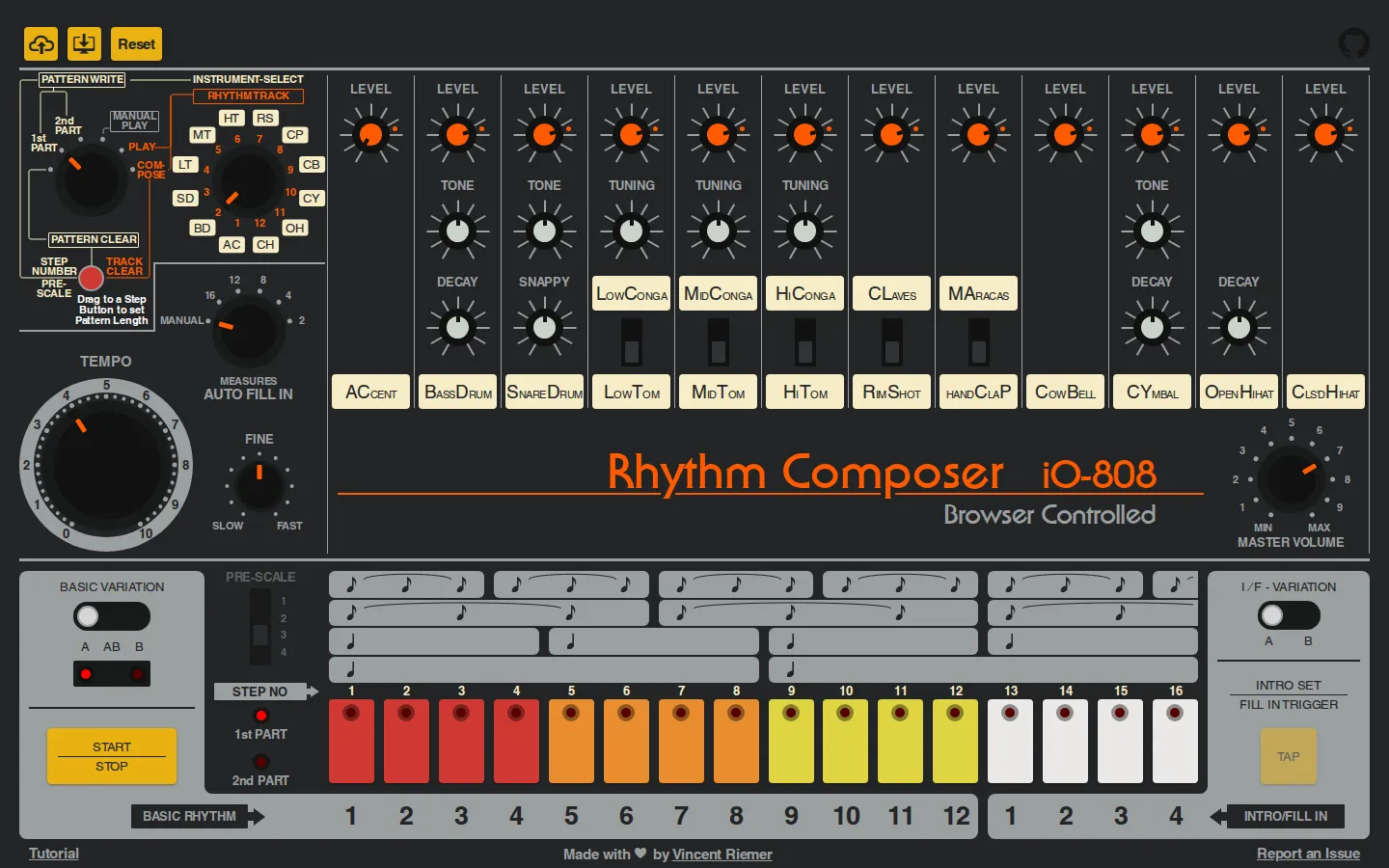
iO-808 recreates the logic and dense control panel of a Roland TR-808-style rhythm composer inside a web page. It is free, unapologetically hardware-shaped, and aimed at people willing to learn a mode knob before the beat drops.
What is iO-808?
The machine is more than a row of instant drum pads. Its documented workflow lets you choose an instrument, place hits on step buttons, shape individual sounds, extend patterns across two parts, schedule fills, and assemble a small rhythm set. The intriguing technical wrinkle is under the hood: the drums are synthesized in the browser with the Web Audio API rather than pulled from a sample folder. That makes iO-808 both a music toy and a compact piece of web-audio archaeology, with a public source repository for anyone who wants to inspect how the thump is made.
What you can do there
- Program drum triggers on step buttons
- Adjust synthesized drum sounds
- Arrange and play rhythm patterns
- Save and load pattern collections
Why we picked it
The commitment is the fun. Instead of sanding an old drum machine down to four friendly buttons, iO-808 keeps the switches, pattern logic, and fiddly charm that make the original workflow interesting. It gives rhythm-curious visitors something to learn, while its in-browser synthesis has remained influential enough to inspire newer web instruments years later.
How to get the most from it
Begin in the first-part programming mode, select the bass drum, and toggle a few step buttons. Add snare and hi-hat hits, then adjust one sound control at a time so you can hear what each knob contributes. The official tutorial is worth keeping nearby; use the JSON save option before moving a pattern collection between browsers or computers.
Good to know
Sound is the point, so plan to use speakers or headphones. The documented interface is free and stores progress locally, with JSON files for explicit save and load. Its hardware-style panel is dense, and current mobile, touch, keyboard, accessibility, browser-compatibility, ad, popup, privacy, and offline behavior were not verified during this check. The source code is MIT-licensed, but that does not automatically settle every branding or artwork right.
Who made it, and when?
Vincent Riemer is the credited creator or organization. The earliest supported launch date we found is 2016.
Creator’s official page Open iO-808More like this
Radio Garden

Spin the globe and tune into live radio stations almost anywhere on Earth.
Chrome Music Lab

Friendly musical experiments that explain rhythm, melody, sound waves, and harmony by letting you play.
Blob Opera

Conduct four cheerful blobs whose vowel-shaped voices turn almost any gesture into opera.
Patatap

Turn every letter key into a synchronized burst of sound and animation.