
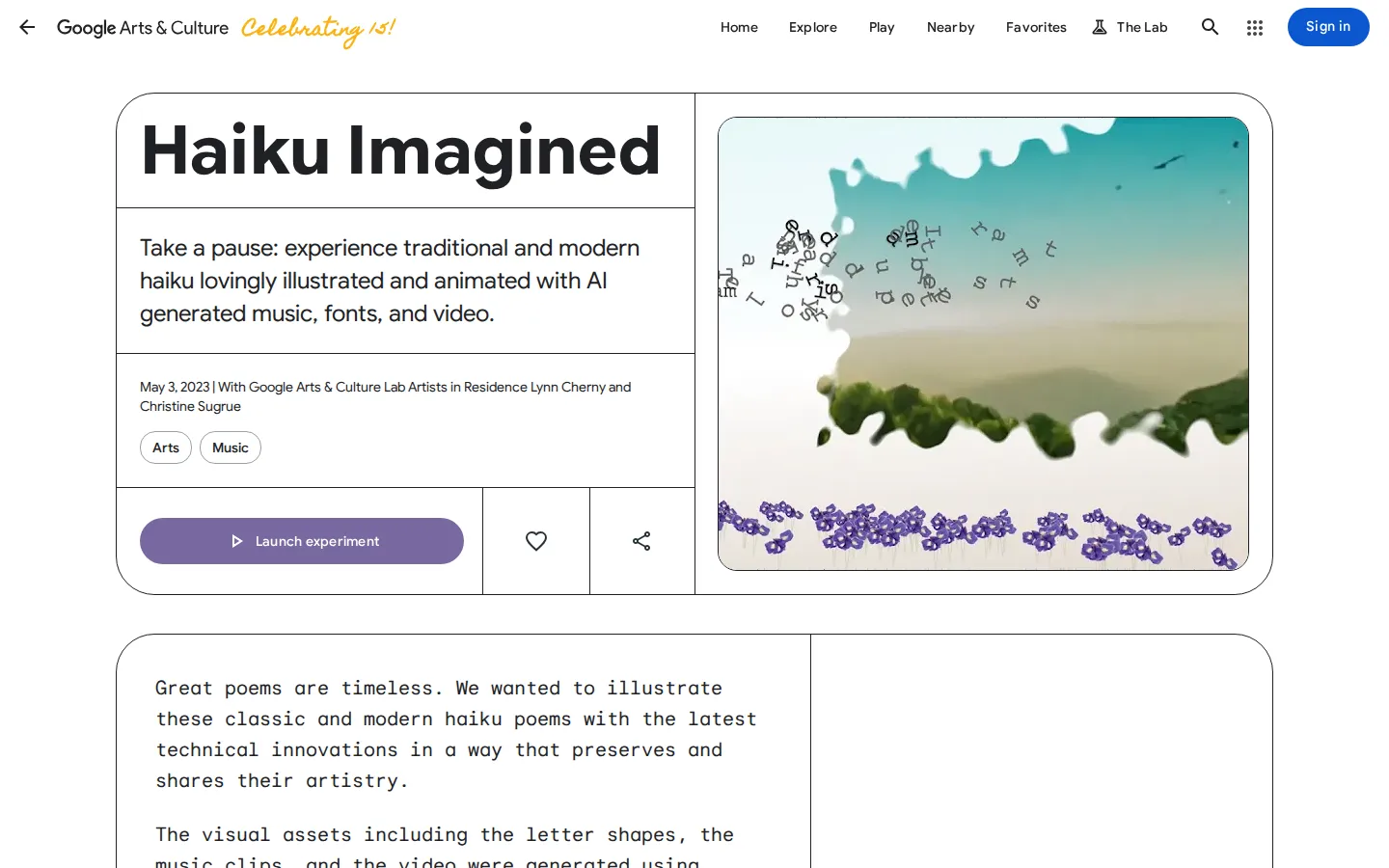
Haiku Imagined pairs traditional and modern poems with generated typography, moving images, and music. Pick a poem, let its miniature scene unfold, then poke the emphasized words for extra visual and sonic flourishes. The poems remain the anchor; the AI work is the weather moving around them.
What is Haiku Imagined?
This is not a poem generator. Lynn Cherny curated the haiku, then generated and edited the surrounding letterforms, video, music, and icon imagery; Christine Sugrue built the Three.js presentation and interactions. Independent walkthroughs describe a compact gallery of illustrated tiles split between traditional and modern poems. Selecting one turns reading into a small performance, with typography, motion, and sound arriving around the text. Some emphasized words open additional media when clicked or tapped. The restraint is the clever bit: the technology gets a whole toy box, but the poem still has to fit in the palm of your attention.
What you can do there
- Choose a traditional or modern haiku
- Watch and listen to its generated presentation
- Trigger additional media from emphasized words
Why we picked it
Generative showcases often make the model the main character. Haiku Imagined gives that role back to short, human-written poems and uses AI as stagecraft instead. The result is brief enough for a coffee-break detour yet layered enough to reward a second pass with sound on.
How to get the most from it
Start with one traditional poem and one modern poem, preferably with audio enabled. Let each presentation finish before clicking the emphasized words, then replay it once to notice how the lettering, music, and moving image answer the text. Treat the generated material as an interpretation, not the poem's official meaning.
Good to know
Motion, WebGL, and sound are central to the presentation, while captions, transcripts, keyboard support, and reduced-motion behavior are not documented here. The poems are credited as curated human work; the fonts, video, music, and other surrounding media were generated and edited with Google AI research tools.
Who made it, and when?
Lynn Cherny and Christine Sugrue is the credited creator or organization. The earliest supported launch date we found is May 2023.
Creator’s official page Open Haiku ImaginedMore like this
myNoise

Shape richly recorded soundscapes with sliders instead of accepting generic background noise.
Pixel Thoughts

Place one worried thought inside a star and watch the universe give it some scale.
A Soft Murmur

Mix rain, thunder, waves, birds, wind, and café noise into your own quiet background.
I Miss the Office

For when your home office is missing the printer, the chatter, and perhaps one squeaky chair too many.