
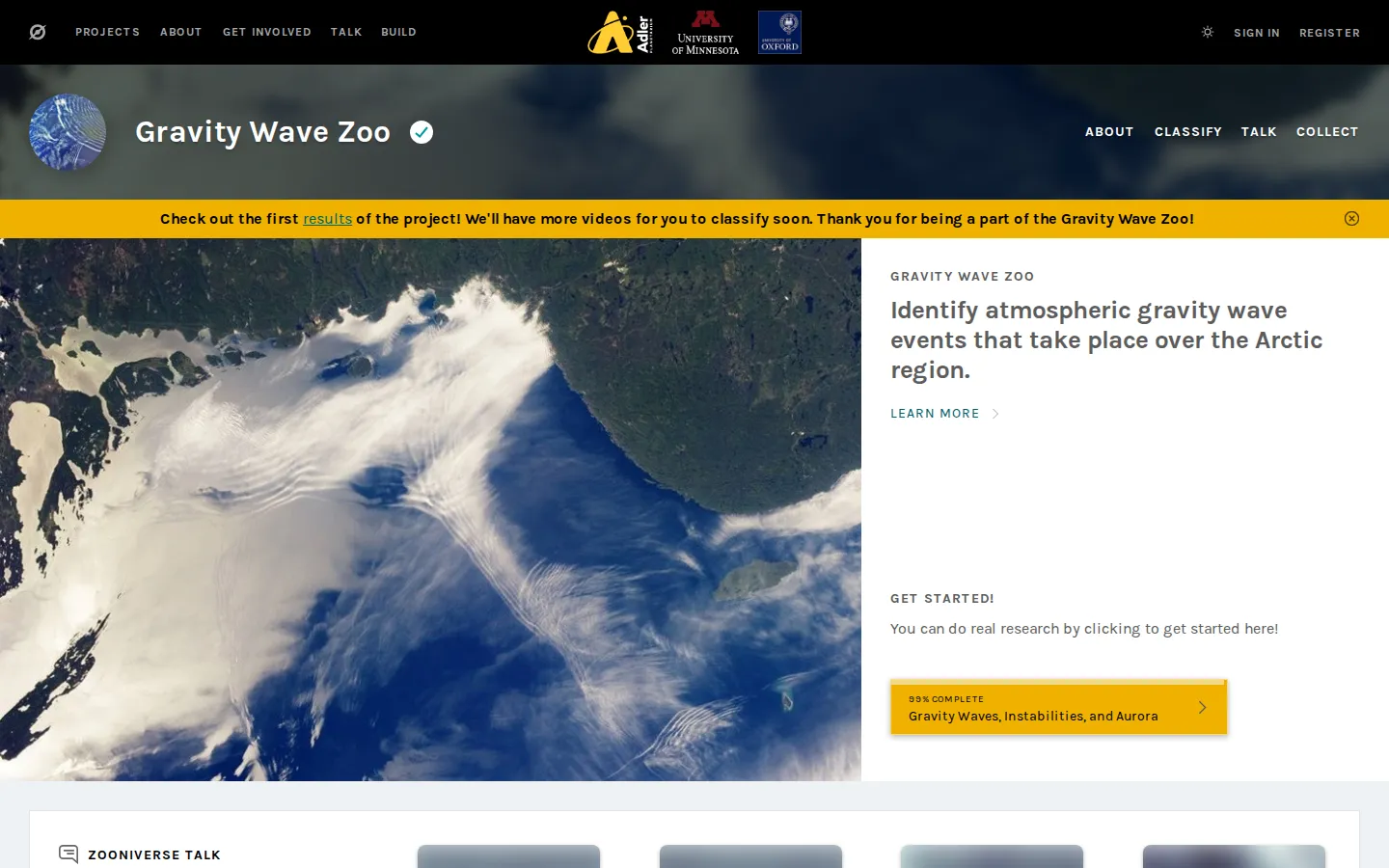
Gravity Wave Zoo turns processed airglow videos from Alaska into a three-question citizen-science task: spot gravity waves, instabilities, and aurora. Its current batch is complete and more videos are promised, so for now the strongest visit is through the project's methods, FAQ, and published results.
What is Gravity Wave Zoo?
This is not about gravitational waves from colliding black holes. Gravity Wave Zoo follows waves in Earth's atmosphere, using faint infrared airglow as a tracer near the edge of space. The research team converts images from an all-sky camera at Poker Flat, Alaska, into short processed videos, then asks volunteers whether each clip contains a gravity wave, an instability, or aurora. Twelve people see each subject; an eight-person supermajority produces a final label, while uncertain cases remain inconclusive. The current landing page is caught between seasons: it advertises the classification experience, but the active batch reads 100 percent complete and promises more videos soon. That pause still leaves a worthwhile trail. The Research and FAQ pages explain why ripples in the upper atmosphere matter, the Results page points to a peer-reviewed study, and Talk preserves the collaborative side of the project. It is a compact look at how a blurry-looking patch of night sky can become a structured dataset instead of simply being waved away as atmospheric wallpaper.
What you can do there
- Inspect airglow videos for gravity waves, instabilities, and aurora
- Read the project methods and published results
Why we picked it
The project gives an obscure atmospheric signal a remarkably concrete volunteer job. Three yes-or-no questions, repeated across many short clips and checked through a stated consensus rule, connect casual pattern spotting to published research without pretending that one click is a discovery.
How to get the most from it
Begin with Research for the airglow primer, then open FAQ to learn the common look-alikes: clouds, meteors, the Moon, and even bugs on the camera dome. Check Results before Classify; the present batch is complete, so the paper and project discussion are the useful stops until new clips arrive.
Good to know
The live page currently promises more videos but shows no active subjects, so classification may not be available on your visit. The zeroed all-time counters also conflict with the published paper's historical totals. No local rendering or interaction test was performed, and the destination's frame policy keeps it out of Site Stumble's embedded browser.
Who made it, and when?
Upper Atmosphere - Space Environment Astrophysics group at Arizona State University is the credited creator or organization. The earliest supported launch date we found is October 23, 2023.
Creator’s official page Open Gravity Wave ZooMore like this
The Pudding

Visual essays that use code, data, and interaction to explain culture unusually well.
Earth Nullschool

A living globe of wind, weather, ocean currents, and atmospheric motion.
The True Size Of…

Drag countries around the map and watch familiar size comparisons fall apart.
MapCrunch

Drop into a random street-level view somewhere in the world and figure out where you landed.