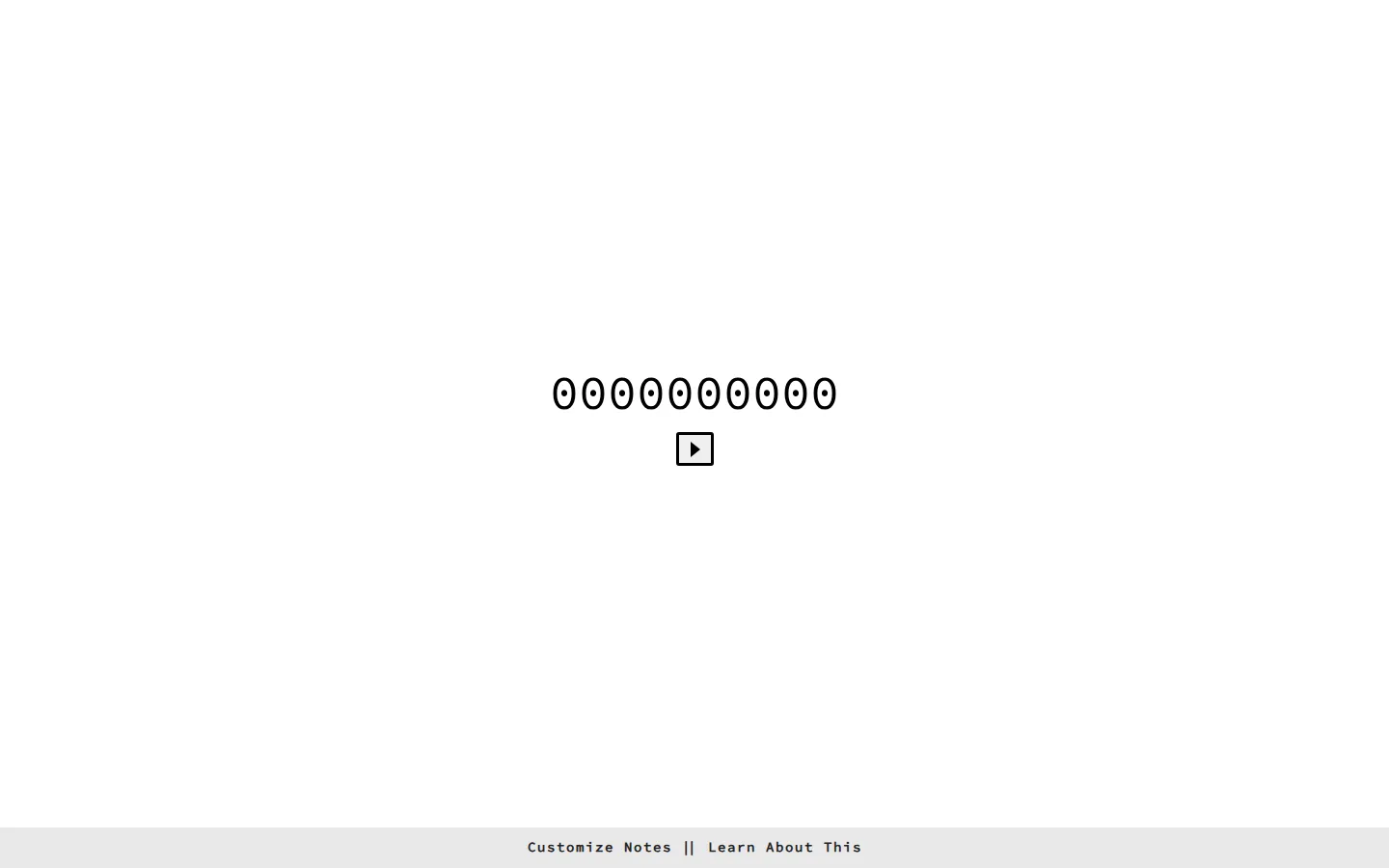
Binary Piano lets a ten-column binary counter do the composing: whenever a column changes to 1, its assigned note joins the pattern. The page is spare, the rule lands fast, and the sound is the main event.
What is Binary Piano?
The screen begins at 0000000000 and gives each of the ten positions its own note control. Under the hood, the counter climbs through binary values; a column sounds when it changes to 1, so simple arithmetic blooms into overlapping pulses. You can swap the notes, and the project documents shareable URL parameters for passing a custom setup along. It is less piano lesson than pocket-size generative concert: one mechanical rule with surprisingly musical consequences.
What you can do there
- Listen as changing binary digits trigger assigned notes
- Customize the ten notes
- Share a custom setup through its URL
Why we picked it
The fun comes from watching a rigid counting system accidentally behave like a composer. Ten editable note slots add just enough authorship without burying the clean central trick under a control-room dashboard.
How to get the most from it
Open it with sound available and give the counter a little time to build its pattern. Then use Customize Notes to replace a few pitches; the documented URL parameters let you pass a favorite arrangement along.
Good to know
Audio is essential, and the central number changes continuously during playback. Browser autoplay rules may require a click before sound begins; mobile, keyboard, screen-reader, advertising, popup, and privacy behavior are not documented.
Who made it, and when?
Tim Holman is the credited creator or organization.
Creator’s official page Open Binary PianoMore like this
Radio Garden

Spin the globe and tune into live radio stations almost anywhere on Earth.
Chrome Music Lab

Friendly musical experiments that explain rhythm, melody, sound waves, and harmony by letting you play.
Blob Opera

Conduct four cheerful blobs whose vowel-shaped voices turn almost any gesture into opera.
Patatap

Turn every letter key into a synchronized burst of sound and animation.