
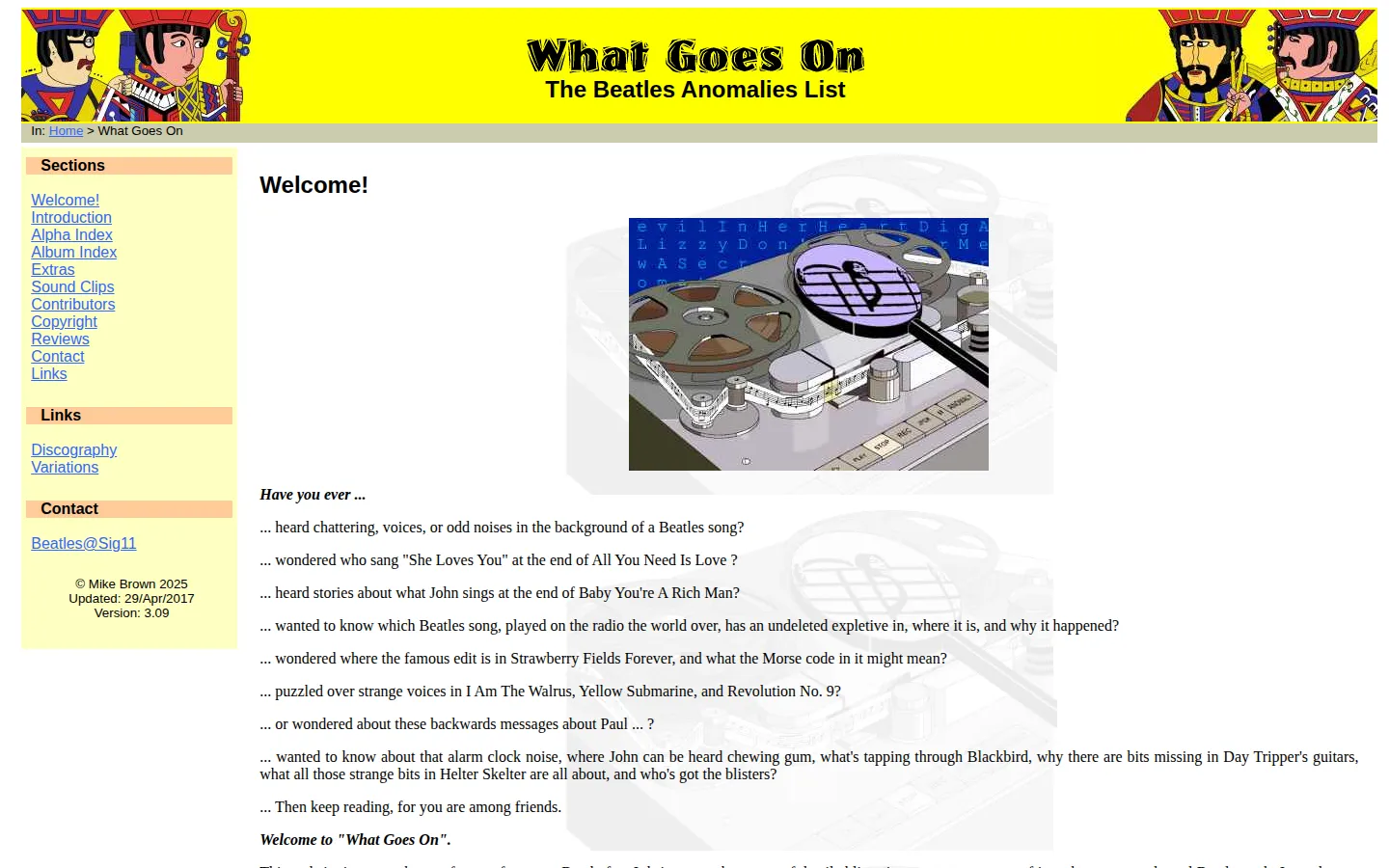
What Goes On is a deep, old-web listening guide to the strange crumbs left inside Beatles recordings. Pick a song, follow its timestamped notes, and return to music you know by heart with a suspicious new set of ears.
What is Beatles Anomalies?
The site is arranged like a reference shelf rather than a streaming player. Its alphabetical and album indexes lead to song pages where exact timestamps sit beside reports of clipped notes, leaked chatter, conspicuous edits, pedal squeaks, odd mix behavior, and other sonic loose threads. Entries often identify a channel, release, or mix that makes a detail easier to catch. A separate sound page lists processed snippets for selected examples, but the real pleasure is using the notes as coordinates and checking the recordings yourself. The project also draws a useful line around its subject: an anomaly may be a mistake, but it can just as easily be an edit, an unintended voice, or a puzzling detail that survived the session.
What you can do there
- Browse Beatles songs alphabetically or by album
- Match timestamped notes to details in a recording
- Use selected processed clips as listening cues
Why we picked it
It gives extremely familiar music a fresh job to do. A timestamp and one oddly specific clue can turn a three-minute pop song into careful close listening, while the archive's accumulated corrections and contributor history make it feel like a fan-built field guide rather than a list of trivia tossed together overnight.
How to get the most from it
Choose a song from the alphabetical index, note one or two timestamps, then cue up your own copy with headphones. Pay attention to any channel or mix label before deciding the clue is missing. If the detail stays buried, check whether the sound page lists a processed excerpt, then return to the full recording and try again.
Good to know
The pages are dense and link-driven, and some entries are deliberately tentative because different listeners or releases can produce different answers. Short MP3 links are listed for selected examples, but playback was not verified. Expect much more reading and repeat listening than polished app-like interaction.
Who made it, and when?
Mike Brown is the credited creator or organization.
Creator’s official page Open Beatles AnomaliesMore like this
Radio Garden

Spin the globe and tune into live radio stations almost anywhere on Earth.
Chrome Music Lab

Friendly musical experiments that explain rhythm, melody, sound waves, and harmony by letting you play.
Blob Opera

Conduct four cheerful blobs whose vowel-shaped voices turn almost any gesture into opera.
Patatap

Turn every letter key into a synchronized burst of sound and animation.